



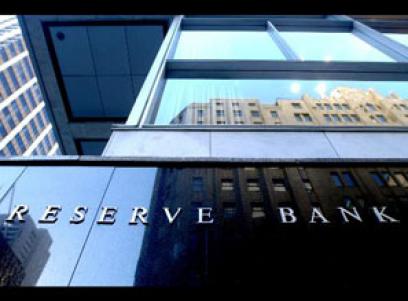
The Reserve Bank of Australia is widely expected to lift the official cash rate by 25 basis points to 4.60% at its board meeting today, a move that would mark the fourth rate increase of the year and push borrowing costs to their highest level since November 2011. With near-unanimous consensus among economists and money markets pricing in a roughly 90% probability of the move, the question is no longer whether the RBA hikes, but how aggressively it signals what comes next.
Aussie markets have been repricing steadily ahead of the decision, with the ASX 200 facing persistent headwinds from elevated discount rates and compressed valuations across rate-sensitive sectors. Consumer discretionary and real estate stocks have borne the brunt of the selling pressure, as rising mortgage costs erode household spending capacity and dampen buyer demand in the residential property market.
The Australian dollar, by contrast, has found support from widening interest rate differentials relative to central banks in economies that have paused or pivoted toward easing, with AUD/USD benefiting from the hawkish domestic backdrop. Fixed income markets have also adjusted, with short-duration yields rising as money markets price in a more aggressive terminal rate path than the majority of economists currently forecast.
What To Expect
The anticipated move to 4.60% would represent the fourth consecutive 25 basis point hike delivered by the RBA in 2026, a tightening cycle driven by stubbornly elevated core inflation sitting at 3.6%, which remains above the central bank’s 2% to 3% target band. Contributing pressures include higher global energy costs linked to ongoing Middle East geopolitical tensions and tight domestic labour markets in cities including Brisbane, Perth, and Adelaide, all of which are sustaining price pressures across services and construction.
Top Australian Brokers
- Pepperstone - Top Australian broker - Read our review
- eToro - Invest in ASX and international shares - Read our review
All 29 economists surveyed by Bloomberg ahead of the meeting forecast a 25 basis point hike, with Australia’s big four banks, CBA, Westpac, NAB, and ANZ, aligned on the move. The split emerges when looking beyond September. Most economists treat 4.60% as the likely peak for this cycle, at least for now, but ANZ, HSBC, and UBS have each flagged a fifth hike in November as a realistic or base-case outcome, which would take the cash rate to 4.85%.
Current market pricing implies at least two additional hikes beyond the September decision, with better-than-even odds of a third, a scenario that would push the cash rate above 5.00% by mid-2027. That gap between economist consensus and market pricing reflects ongoing uncertainty about how embedded inflation expectations have become in business and consumer behaviour.
Commercial lenders have already begun front-running the official decision. According to data, 18 lenders have raised at least one fixed mortgage rate this month, including all of Australia’s top six banks. Macquarie Bank has been among the most active, lifting its fixed home loan rates twice in three weeks, with its most recent adjustment of up to 20 basis points pushing its lowest one-year fixed rate to 6.49%. The pattern reflects lenders managing their own funding cost expectations while also signalling to borrowers that the era of low fixed rates is firmly in the past.
For households, the cumulative impact of four hikes in 2026 is becoming increasingly tangible. A single 25 basis point increase adds approximately $91 per month to repayments on a $600,000 home loan. Across four hikes, that cumulative burden reaches $364 per month on the same loan. For borrowers carrying the average Australian mortgage of around $731,000, the monthly addition from tomorrow’s expected hike rises to approximately $119, with the 2026 cumulative impact reaching roughly $480 per month.
Today’s RBA decision may well deliver the 25 basis point hike that virtually every economist expects, but the more consequential question is what the board signals about the path ahead, and with sticky inflation, aggressive market pricing, and a growing household repayment burden all in play simultaneously, the RBA’s next few words may matter just as much as the rate move itself.




