



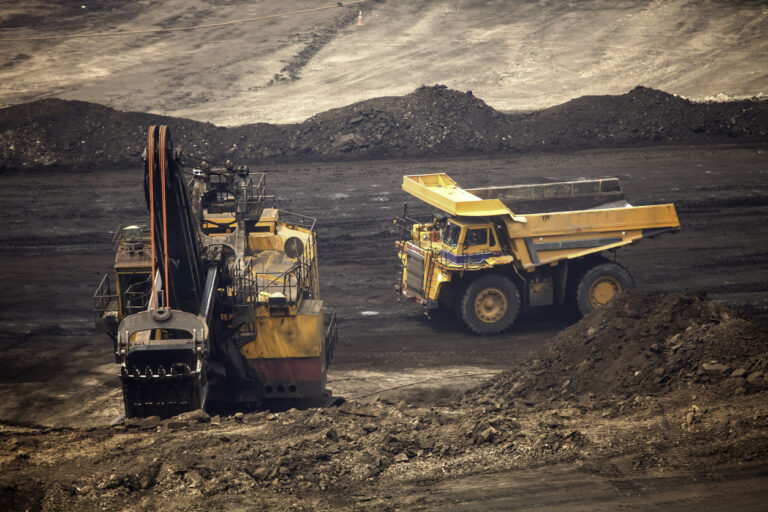
Australia is known the world over as a premier mining country, with ASX mining stocks in the top tier of the world’s producers of lithium, nickel, copper, gold, silver, and other metals and minerals.
The world runs on hard commodities that come from the earth, and ASX investors are blessed with a wealth of stellar miners from which to choose, in virtually all commodity categories. But whilst miners can offer very attractive growth opportunities and dividend income, the sector is cyclical in nature. Underlying commodity prices, production costs, exchange rates, and even other country’s policy and economic outlook can all play their part in moving stocks in the sector.
We have seen plenty of this play out in 2026, where inflation and energy prices have been running hot, impacting transport and production costs, whilst the weak Chinese property market has hit iron ore names in recent months. And that’s before we even touch on the volatility in lithium.
So yes, mining stocks can be a great investment, but they come with a level of volatility that might not be suited to all account goals. That also means that the best mining stock for you will depend on what you want from your investment, and your portfolio. Some are attracted to bargain, or value stocks, while others prefer stocks with high growth potential.
If you are looking to invest in mining stocks on the ASX, you will find a shortlist of the most interesting mining ideas heading into the final stretch of 2026.
Top Australian Brokers
- Pepperstone - Top Australian broker - Read our review
- eToro - Invest in ASX and international shares - Read our review
Best ASX mining stocks: comparison snapshot
The established resources names like BHP and Rio Tinto provide the strongest diversification, while Fortescue offers a higher-yielding but more concentrated iron ore investment. It has also sold off considerably over the past year, offering a better potential entry for those that believe in the long term investment case. But let’s take a closer look at the most interesting names in each of the main metals.
| Company | ASX ticker | Primary exposure | Market cap (A$) | Dividend yield* | 1-year price move |
|---|---|---|---|---|---|
| BHP Group | BHP | Diversified (Copper, iron ore, coal) | A$292.4b | 4.2% | +31.2% |
| Rio Tinto | RIO | Diversified (Iron ore, copper, aluminium, lithium) | A$243.4b | 4.5% | +10.4% |
| Glencore | GLC | Copper, zinc, nickel, cobalt, coal and commodity trading | A$119b | new listing | new listing |
| Fortescue | FMG | Iron ore | A$44.9b | 7.6% | -33.6% |
| Northern Star Resources | NST | Gold | A$36.0b | 2.2% | +6.2% |
| South32 | S32 | Copper, silver, zinc, manganese and other base metals | A$19.5b | 3.0% | +35.6% |
| PLS Group | PLS | Lithium | A$8.9b | 1.9% | -20.0% |
| IGO | IGO | Lithium and copper development | A$4.0b | 1.0% | -9.9% |
| Nickel Industries | NIC | Nickel | A$2.7b | 0.0% | -17.3% |
| Silver Mines | SVL | Silver development | A$306m | 0.0% | -24.2% |
The above market data is based as of Nov 1 2026, with 1 year price moves not inclusive of dividends.
The Best ASX Copper Mining Stocks
Copper has long been considered a bellwether for the economy, given its use in so many industrial applications. While not uniformly classified as a critical battery mineral, copper’s role has long past evolved beyond electrical wiring and plumbing into use in electronic components of all types as well as the electrical grid itself, electric vehicles, renewable energy delivery systems, and now data centres.
Whilst the expansion of electricity infrastructure and growing demand for power-intensive technologies could support copper demand for many years, the metal remains an economically sensitive commodity.
That being so, local investors now have three of the world’s largest copper mining companies listed on the ASX, with Glencore recently joining BHP and Rio Tinto, via a secondary listing.
BHP Group (ASX:BHP)
With a market cap of $292 billion, BHP now holds the crown of the largest stock on the ASX, and the largest mining company in the world. The company bills itself not as a mining company, but as a provider of the essential resources needed for global growth and a transition to cleaner energy.
The company has operations in virtually every corner of the world, producing copper, iron ore, nickel, metallurgical coal, and potash. BHP is a prolific dividend payer and has bounced back from challenging times repeatedly over the last decade.
BHP’s copper exposure has grown substantially over recent years through operations in Chile and Australia, supported by earlier acquisitions and ongoing expansion projects, with recent financials highlighting the shift in earnings at the company.
FY26 numbers saw cash flow increase to US$9.8b, on EBITDA that grew 27% Y/Y to US$33b. Copper for the first time delivered more than half of earnings (54%), on 2million tonnes of copper production for the second consecutive year.
BHP shares remain the most balanced miner on the ASX, and the YTD gains of 25% into the final two months of the year are more than 10x that of the ASX 200 over the same period.
Rio Tinto (ASX:RIO)
Rio’s mission statement is to find better ways to produce what the world needs. The company has operations in eight countries around the world, producing iron ore, aluminum, copper, lithium, borates, diamonds, and salts.
While BHP has decided to stay out of the lithium market, Rio has a demonstration plant in the US state of California to recover lithium from waste rock, along with projects in Argentina, Canada and a project on hold in Serbia. Rio recently acquired Arcadium Lithium, with assets in both hard rock and lithium from brine operations along with chemical refining of lithium, giving the company substantial access to the lithium market. Rio Tinto completed the acquisition on 6 March 2025, and Arcadium is now part of Rio Tinto’s lithium business
The company’s iron ore operation in Western Australia continues to be key for the business, but its Oyu Tolgoi copper mine in Mongolia is another important growth asset, in the future facing minerals goal.
Rio’s first-half 2026 results showed improving financial performance, with underlying EBITDA increasing 28% and free cash flow rising 75% compared with the previous corresponding period, with continued progress in its October 2026 production update. Oyu Tolgoi copper production increased 29% year to date, while lithium production was up 33% over the same period.
Glencore (ASX:GLC)
Glencore is one of the world’s largest diversified natural resources companies, with operations spanning copper, zinc, nickel, cobalt, coal and commodity trading. The company listing on the ASX mid October, with a desire to be part of a market that has plenty of interest in mining stocks, and a pool of Superannuation capital for the sector.
Unlike BHP and Rio Tinto, Glencore combines substantial mining operations with a large global commodity trading and marketing division. This gives the company exposure not only to commodity production but also to trading opportunities arising from changes in global supply, demand and energy markets.
Glencore’s first-half 2026 financial results demonstrated the strength of this model as revenue increased 49% to US$174.4 billion, while adjusted EBITDA rose 86% to US$10.1 billion. Its latest September-quarter production update reported year-to-date copper production of approximately 599,000 tonnes, nickel production of 54,600 tonnes and zinc production of 547,000 tonnes.
The company’s commodity marketing operations also separate it slightly from traditional mining businesses, giving the potential to generate earnings during periods of market disruption, potentially offsetting some of the pressures of the sector. Certainly a new addition to the ASX that warrants a second look as it will likely be included in the main indices in upcoming rebalances.
The Best Lithium Stocks on the ASX
Not long ago Lithium was on fire with the perception demand driven by our insatiable appetite for battery-powered electronic devices and the anticipated shift from ICE (internal combustion engine) powered vehicles to battery powered vehicles, from cars and buses and trucks up to airplanes. Oversupply conditions and a slow fall of electric vehicle sales in the midst of high interest rates put the lithium price in a dramatic downward trend.

Here is one of the best ASX lithium miners on the ASX and another former best buy with a new owner.
PLS Group (ASX:PLS)
PLS Group, formerly known as Pilbara Minerals, is one of Australia’s leading listed lithium producers, with its flagship asset the Pilgangoora operation in Western Australia, a large hard-rock lithium mining and processing business. The company also has exposure to lithium chemical processing in South Korea through its partnership with POSCO, alongside development opportunities in Australia and Brazil.
PLS is a good example of how quickly a mining company’s financial position can change with the commodity cycle, as after suffering from falling lithium prices in FY2024 and FY2025, the company returned to much stronger performance in FY2026. Revenue came in at A$1.93B, spodumene production was a record 879,500 tonnes, and cash stood at A$2.29 by the end of June, allowing for a 5 cent fully franked dividend.
Whilst much of the production growth has continued into early FY27, where Pilgangoora reached a record 267,600 tonnes, the stock has fallen back 60% since June 1st as underlying spodumene prices come under pressure once more. That cyclicality in miners is felt no more than in lithium, with the chart highlighting some of the boom/bust cycle.
IGO Limited (ASX:IGO)
IGO has historically been associated with nickel mining, but its investment case has changed considerably in recent years. IGO’s mission statement is to mine the metals needed for a clean energy future, and the company’s exposure to lithium through Tianqi Lithium Energy Australia, including an indirect interest in the Greenbushes lithium operation, has become more important than nickel to the business.
Greenbushes is one of the world’s most significant hard-rock lithium operations, providing IGO with exposure to large-scale, established lithium production, where the latest quarterly update saw record production.
Full Year 2026 Financial Results showed growth, with revenue at A$462.9million, NPAT at A$145.3millio, and cash flow of A$134million. Stronger lithium operations, contributions from its JVs and the absence of the impairment charges from the previous year all helped improve the picture, even if shares are down 50% since June 1st when lithium names took a turn.
Galaxy/Orocobre/Allkem/Arcadium History
ASX mining giant Rio Tinto (ASX:RIO) finally achieved its goal of expanding into lithium mining when it acquired lithium miner Arcadium Lithium (ASX:LTM). Arcadium came into being following the merger of Allkem Lithium with US-based lithium chemicals producer Livent Corporation, combining mining and chemical processing into one company. Allkem came into being when ASX listed hard rock lithium miner Galaxy Resource combined with lithium from brine producer Orocobre.
The RIO share price spiked upwards on the news of the acquisition of Arcadium in early October of 2024.
The Best ASX Nickel Mining Stocks
Demand for nickel has broken out of its traditional use in stainless steels, vaulting into the latest holy grail of investing – critical battery minerals. The commodity is now in high demand for its use in batteries for electronic devices and electric vehicles.
Nickel Industries (ASX:NIC)
Nickel Industries holds interests of between 70% and 80% in four different nickel mining operations in Indonesia. Although the price of nickel escaped the downturn experienced with lithium, an oversupply of nickel and weakening demand in China kept pricing in check in volatile trading.
The company has expanded beyond its original rotary kiln electric furnace operations, making its business more integrated but also more complex.
In the September 2026 quarter, Nickel Industries reported US$125.9 million of adjusted operating EBITDA, an increase of approximately 4% from the previous quarter. The period also saw continued commissioning progress at the Excelsior Nickel Cobalt project, including production milestones for nickel and cobalt products.
Nickel Industries shares are one of the more best ways to invest in nickel production through the ASX, but it is better suited to investors comfortable with commodity volatility, and country risk.
The Best ASX Gold Mining Stocks
Historically, gold has attracted investor interest as a safe haven in troubled times. Interest rates remain a key factor for risk appetite and valuations, with commodities often impacted.
However, owning a gold mining company is not the same as owning physical gold. Mining costs, production volumes, operational problems and capital expenditure can all affect shareholder returns, even if the underlying price often drives broader sentiment in the sector.
Acquisition activity is generally a welcome sight for investors in a specific sector, as best of breed stocks are often gobbled up by larger competitors. Newmont mining upped its initial offer to buy Australia’s largest gold miner (Newcrest Mining (ASX:NCM)) back in 2023, making Newmont the largest gold miner on the planet.
Northern Star Resources (ASX:NST)
With a market cap of $36 billion, Northern Star now ranks at the top of the heap of primary ASX listed gold miners, with a stunning share price performance history over the last decade, up 500%+. Year over year the share price is up 6%, as the underlying gold price rally took a firm pause.
Northern Star’s FY2026 results were strong, as revenue increased 19% to A$7.62 billion, while statutory net profit after tax rose 24% to A$1.66 billion. Underlying EBITDA moved to A$4.27 billion, as stronger gold prices helped drive value.
The September 2026 quarter however was more mixed, as NST sold 364,000 ounces of gold at an all-in sustaining cost of A$3,217 per ounce. Despite this, Northern Star remains one of the strongest choices if you are looking for exposure to a large, established gold producer.
The Best ASX Silver Mining Stocks
Silver is also considered a safe haven investment but does not match the allure of gold. The result of investor preference for gold is lower liquidity for silver investors. It is also widely used in electronics, electrical applications, solar technology and other industrial processes, making the metal sensitive to industrial demand and sentiment.
Silver Mines Limited (ASX:SVL)
Silver Mines has a market cap of $319million dollars, and is the best pure play silver miner listed on the ASX.
The company is the sole owner of the Bowden Silver Project in New South Wales, the largest undeveloped silver deposit in Australia, with additional lead and zinc. The company’s July feasibility study outlined a staged development plan and significantly increased estimated reserves of 93.5 million ounces of contained silver.
Silver Mines will need ~A$455million in capex for the project, suggesting a Stage 1 mine life of 17 years, and a post tax net value of A$626million using a 5% discount rate. Approvals will be the key issue.
If Bowdens receives the necessary approvals, secures financing and progresses into construction, the company could experience a significant change in valuation as the project moves closer to production. But this is far from guaranteed, keeping Silver Mines in the speculative development bucket rather than that of an active producer.
South32 Limited (S32)
South32 ‘spun off from BHP and began trading on the ASX in May of 2015, rising a 88% since listing with a market cap of A$19.46 billion. Up 25% over the past 12 months, South32 has been one of the better performers in the sector over the period.
That being so, South32 should not be confused with a pure-play silver company, as its earnings depend on a broader portfolio of mining and processing assets including copper, zinc, and manganese.
The company’s FY2026 performance demonstrated the benefits of diversification and stronger commodity prices, as South32 reported attributable NPAT of US$1.09 billion, compared with US$213 million in FY2025.
If you are interested mostly in the silver angle, the September 2026 quarter showed that operating conditions at Cannington can be challenging, with payable silver production declining approximately 13% year on year.
Best Mining Stocks: The Roundup
The strongest choice of the ASX miners will depend on whether you are prioritising diversification, growth, income or exposure to a particular commodity. The conservative top choices remain BHP and Rio Tinto, with the broad exposure to a range of commodities balancing some of the individual commodity risk. That can also dampen some of the upside in one particular sector.
Silver mines is the most speculative of the bunch, with future value dictated by approvals, financing and only then, development.
In the middle, you have Glencore, a new entrant to the ASX, but a global name with a diversified base. The commodities trading division could help offset some of the volatility of operations, and then there is the potential of new capital inflows once the stock is added to the major indices here.
Whilst the picture in the Materials space has changed quite a lot in recent months, with plenty of rotation on the ASX, a shift in sentiment globally could see a return to strength to some of the more beaten down commodities. A lot to work through, but if you need more, below is a runthrough of the ASX 200 Materials sector, and how all the individual names are performing. You will find a lot more than the top 20 mining companies to check through at leisure.
Mining Stocks FAQs
How do you Invest in Junior Mining Stocks?
You can invest in Junior mining stocks by purchasing shares through a regulated broker. Junior mining stocks are new or smaller companies looking to develop a natural resource deposit. They are riskier than investing in major mining companies as they tend to have lower amounts of capital and shorter histories. Their popularity with Australian investors comes from the fact that their value can increase dramatically if they hit upon a large deposit of the resource they are mining. However there is no way to know how much of the natural resource is contained in the deposit, so their value can easily drop should the deposit not live up to expectation. Investors should always do their due diligence and have a risk management plan in place.
Which Companies are Mining Lithium?
PLS is a major lithium producer, IGO participates through joint venture interests, and Rio Tinto combines lithium with a much larger diversified mining portfolio.
When is the Best Time to Buy Gold Stocks?
Gold mining stocks are companies whose value is closely tied to the price of gold, though their stock price is affected by other factors as well. Gold is an asset that is traditionally seen as a safe haven in times of uncertainty.
Gold can perform well during periods of inflation and economic uncertainty, but the relationship is not consistent, as real interest rates, currency movements, central bank demand and investor sentiment can all affect gold prices.
Are Copper Mining Stocks Worth Buying?
Copper mining stocks could be worth buying. As global demand for electricity grows, copper mining stocks could prove to be a worthwhile investment. However, you should do your own due diligence and take into account your own financial situation before deciding to invest.
Is Silver a Better Investment Than Gold?
Gold is more closely associated with investment demand and monetary uncertainty, while silver has a larger industrial demand component. The two serve different purposes, and whilst silver may ride a similar path with greater volatility, that can be both a good and bad thing.




