



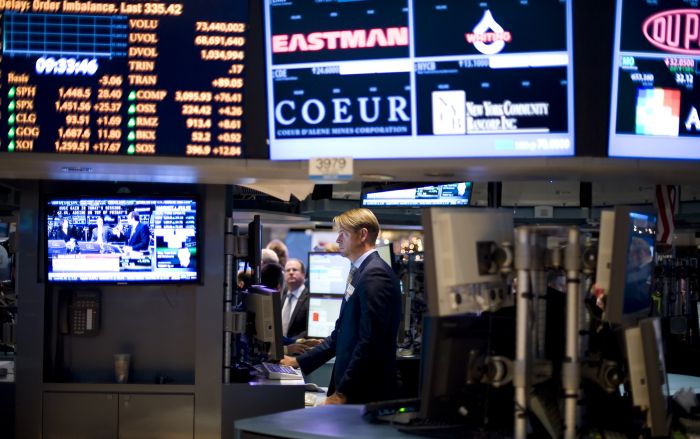
The Nasdaq Composite index experienced a sharp downturn on Monday, March 2, 2026, as U.S. and Israeli military strikes on Iran sent shockwaves through global financial markets, triggering a flight to safety and heightened volatility across asset classes.
Nasdaq Volatility Spikes
The CBOE Volatility Index (VIX), widely regarded as Wall Street’s fear gauge, surged 18.5% as markets absorbed the implications of escalating military conflict in the Middle East. The Nasdaq Composite led losses among major indices, with technology stocks bearing the brunt of the sell-off as market participants reduced exposure to risk assets. The broad-based decline reflected growing uncertainty about potential economic disruptions stemming from the geopolitical crisis.
Top Australian Brokers
- Pepperstone - Top Australian broker - Read our review
- eToro - Invest in ASX and international shares - Read our review
U.S. Treasury markets saw yields rise across the curve, with the 10-year Treasury yield climbing 9 basis points to 4.04% and the 2-year yield advancing 8 basis points to 3.47%. The counterintuitive move higher in yields, despite the risk-off environment, suggests markets are recalibrating expectations for inflation and monetary policy in light of potential supply chain disruptions and energy price shocks.
Core Details
The sharp market reaction came as military action intensified in the Middle East, raising immediate concerns about regional stability and global economic implications. Safe-haven assets responded predictably to the uncertainty, with gold prices advancing 1.2% as markets sought traditional stores of value during periods of geopolitical stress.
The most dramatic price movement occurred in energy markets, where U.S. crude oil prices surged 6.4%. The substantial gain reflects market concerns about potential disruptions to oil supply from the strategically important Middle East region, which accounts for a significant portion of global petroleum production. Any prolonged conflict could constrain supply routes through critical chokepoints, including the Strait of Hormuz, through which approximately one-fifth of global oil consumption passes.
The simultaneous rise in Treasury yields and equity market declines presents a challenging environment for portfolio allocation. Typically, Treasury bonds serve as a hedge during equity sell-offs, but the yield increase suggests markets are pricing in potential inflationary pressures from higher energy costs alongside geopolitical risk premiums.
Nasdaq Outlook and Analysis
The market’s response to the Middle East escalation highlights the interconnected nature of geopolitical events and financial markets. The magnitude of the VIX surge indicates that markets were not fully positioned for this level of military engagement, suggesting potential for continued volatility as the situation develops.
Energy sector equities may see divergent performance, with upstream producers potentially benefiting from higher crude prices while downstream refiners and consumers face margin pressure. Technology stocks, which have limited direct exposure to Middle East dynamics, sold off primarily due to their sensitivity to rising discount rates and risk-off positioning.
The rise in Treasury yields despite the flight to quality suggests bond markets are anticipating that central banks may face difficult trade-offs if energy-driven inflation pressures emerge. The Federal Reserve and other major central banks will be monitoring developments closely, as sustained oil price increases could complicate monetary policy decisions at a time when inflation expectations had been moderating.
Market participants will be watching for several key developments: the duration and intensity of the military conflict, any disruptions to actual oil production or shipping routes, and potential diplomatic efforts to de-escalate tensions. Historical precedent suggests that geopolitical risk premiums can dissipate quickly if conflicts remain contained, but prolonged uncertainty tends to weigh on equity valuations and support safe-haven demand.
The technical picture for major indices has deteriorated, with the sharp decline potentially triggering additional selling from momentum-based strategies and risk-parity funds. Support levels will be tested in coming sessions, and the ability of markets to stabilize will depend heavily on newsflow from the region.
While the immediate market reaction reflects legitimate concerns about economic disruption and uncertainty, the longer-term impact will hinge on whether the conflict escalates further or moves toward resolution, making the coming days critical for establishing a new trading range across asset classes.
Nasdaq Analyst Summary
Bull Case
- Geopolitical risk premiums often prove temporary if conflicts remain regionally contained
- Higher oil prices could boost energy sector earnings and support market segments
- Safe-haven flows into U.S. assets may ultimately support Treasury and dollar strength
Bear Case
- Prolonged Middle East conflict could disrupt global oil supply and spike energy costs
- Rising yields and volatility create headwinds for equity valuations, especially growth stocks
- Escalating tensions may trigger broader risk-off positioning and sustained market weakness




