



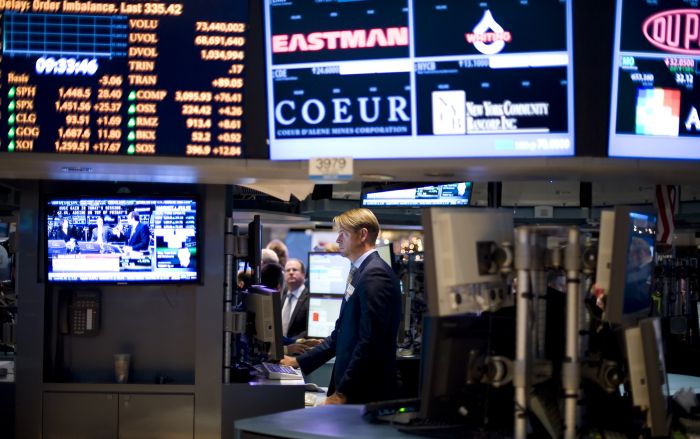
The Nasdaq Composite experienced a challenging start to 2026, slipping below its 50-day moving average, a key support level, after relinquishing early gains during Friday’s session. This signals potential headwinds for the tech-heavy index as markets grapple with mixed economic signals and sector-specific challenges.
Nasdaq Composite Falls Below Key Support Level
On Friday, the Nasdaq Composite closed below its 50-day moving average of 23,250, a level closely watched by technical analysts. This decline followed an earlier rally, ultimately succumbing to selling pressure. The index finished the first trading day of 2026 down slightly, influenced by losses in major technology stocks. This contrasts with other US market indexes the S&P 500, which rose 0.2% to 6,858.47, and the Dow Jones Industrial Average, which increased 0.7% to 48,382.39.
Top Australian Brokers
- Pepperstone - Top Australian broker - Read our review
- eToro - Invest in ASX and international shares - Read our review
The Nasdaq Composite’s five-day losing streak, its longest in over a year, has been attributed to multiple factors. Disappointing electric vehicle delivery data from Tesla, which reported a second consecutive annual sales decline, delivering 1.63 million vehicles compared to 1.79 million in 2024, weighed heavily on sentiment. Concerns about the actual profitability of artificial intelligence technologies beyond the hype, and general technical selling, further contributed to the decline. In contrast, Nvidia gained 1.3%, bolstered by market confidence in its AI leadership.
The “Magnificent 7” stocks, which significantly drove market gains in previous years, showed a mixed performance. Microsoft experienced the largest drop, shedding more than 2%, while Amazon, Meta, and Tesla each lost over 1%. Alphabet and Apple saw smaller declines of less than 1%. Nvidia was the sole gainer among the group, rising more than 1.6% as CEO Jensen Huang prepared to deliver a keynote address at the 2026 Consumer Technology Association (CES) conference on January 5.
The Federal Reserve’s monetary policy also plays a crucial role. The market widely expects the Fed to hold interest rates steady at its January meeting, following three cuts in late 2025 in response to a softening job market. These expectations are already factored into market valuations, and any deviation from this scenario could trigger significant volatility.
Historically, the Nasdaq Composite has demonstrated significant gains during bull markets, averaging a 281% return since 1990. However, the index’s recent performance, coupled with concerns about concentration risk and technical overbought signals, raises questions about the sustainability of the current market environment.
The Nasdaq Composite’s early struggles in 2026 highlight the complex dynamics at play. While AI optimism and potential Fed rate cuts provide a supportive backdrop, challenges within the technology sector and broader economic uncertainties could continue to exert downward pressure on the index.
Nasdaq Analyst Summary
Bull Case
- AI sector growth continues, boosting tech stocks.
- Federal Reserve maintains dovish monetary policy.
- Strong earnings reports revitalize “Magnificent 7”.
Bear Case
- Tech sector faces regulatory headwinds.
- Inflation persists, delaying rate cuts.
- Economic slowdown impacts consumer spending.




