



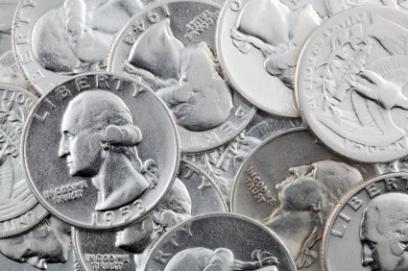
Silver prices have soared over the past year, significantly outperforming gold by more than 3x (135% vs 38%) on the period. The narrative could be about to change however if analysts are right, with UBS having sharply downgraded its silver price forecasts, projecting a flat US$80 per ounce across all tenors through mid-2027 and explicitly cautioning that the risk-reward profile for new long positions has deteriorated following the metal’s 140% surge over the past year.
The Silver price has pulled back from recent highs near US$90 per ounce to trade in the mid-US$70s range, with the metal consolidating after its parabolic rally. The sharp reversal follows months of extreme volatility, with realised volatility hitting 100% over one-to-three-month periods and options-implied volatility hovering near 70-80%. Silver ETF holdings have declined by approximately 67 million ounces year-to-date to around 794 million ounces, reflecting broad-based profit-taking and risk reduction among institutional holders.
The pullback marks a significant shift in sentiment for a metal that had captivated markets with its explosive gains, driven by a confluence of industrial demand optimism, geopolitical tensions, and speculative positioning. However, UBS’s latest analysis suggests the rally may have sown the seeds of its own correction by pricing in too much of the structural bull case and simultaneously destroying price-sensitive demand.
Forecast Revisions
UBS has implemented sweeping cuts to its silver price path, abandoning earlier projections that had pencilled in US$100 per ounce by mid-2026. The revised forecasts now show June 2026 at US$85 per ounce, down from US$100 previously, September 2026 at US$85 per ounce versus US$95, December 2026 at US$80 per ounce compared to US$85, and March 2027 at US$75 per ounce against US$85. The bank’s analysis signals that the major upside phase is likely complete, with silver expected to consolidate near current levels rather than break materially higher.
The most dramatic revision concerns the market’s physical balance. UBS has slashed its 2026 deficit estimate to just 60-70 million ounces, down from an earlier projection of approximately 300 million ounces. This reassessment stems from three key developments: weaker-than-expected photovoltaic demand as high prices accelerate thrifting and substitution in solar cell manufacturing, soft jewellery and silverware consumption as consumers balk at record prices, and structurally weaker investment demand with both ETF and futures positioning showing persistent outflows.
Top Australian Brokers
- Pepperstone - Top Australian broker - Read our review
- eToro - Invest in ASX and international shares - Read our review
The bank now expects total investment demand in 2026 to reach approximately 300 million ounces, down sharply from nearly 440 million ounces in the prior year. Speculative futures positioning remains modest, with net long positions just above 100 million ounces, suggesting limited additional buying power if prices attempt another breakout.
Industrial Demand Under Pressure
The photovoltaic sector, long heralded as a key pillar of silver’s structural bull case, is showing signs of strain under elevated prices. Industrial fabrication including solar applications is forecast to decline roughly 2-3% in 2026 to a four-year low near 650 million ounces. High silver prices have accelerated efficiency improvements and thrifting initiatives across the solar manufacturing industry, with producers working aggressively to reduce silver content per cell without sacrificing performance.
This demand destruction extends beyond industrial applications. Jewellery and silverware fabrication, traditionally price-sensitive segments, have softened considerably as consumers face sticker shock at current price levels. The combination of weakening discretionary and industrial demand has fundamentally altered the supply-demand equation that underpinned earlier, more aggressive price forecasts.
Independent market research corroborates UBS’s more conservative stance. The World Silver Survey 2026, published by the Silver Institute and Metals Focus, now estimates a 2026 deficit of approximately 46.3 million ounces, slightly above 2025’s roughly 40 million ounces but well below some earlier projections that had ranged from 60-70 million ounces to as high as 300 million ounces. While this marks a sixth consecutive year of market deficits, an unprecedented streak in recent decades, the magnitude of the imbalance has proven far smaller than peak expectations suggested.
The Gold Divergence
UBS’s analysis highlights a critical structural difference between silver and gold that helps explain the more cautious outlook. Unlike gold, which benefits from sustained central bank buying as sovereign institutions diversify reserves away from traditional currencies, silver lacks this institutional demand pillar. Central banks purchased hundreds of tonnes of gold over the past year, providing a steady bid that supports prices even during periods of weaker private investment demand.
Silver, by contrast, relies more heavily on cyclical industrial applications and speculative positioning, making it vulnerable to sentiment shifts and economic slowdowns. UBS maintains a constructive view on gold ETFs and gold, forecasting US$6,200 per ounce by mid-year before modest consolidation, driven by ongoing central bank accumulation, large fiscal deficits, expectations of lower real US interest rates, and persistent geopolitical risk. The bank explicitly frames silver as positively correlated with gold and benefiting from a weaker US dollar, but lacking gold’s structural support mechanisms.
This dynamic has implications for the gold-silver ratio, which UBS expects to drift in the 75-80 range rather than collapse toward historical lows as aggressive silver bulls had anticipated. The ratio currently sits near these levels, suggesting silver is unlikely to dramatically outperform gold on a risk-adjusted basis without a significant shift in fundamentals or investor preferences.
Sentiment Shifts
The shift in institutional sentiment is evident in positioning data. ETF outflows of 67 million ounces year-to-date represent a significant reversal from the accumulation phase that characterised earlier stages of the rally. Lighter open interest on COMEX futures markets suggests profit-taking and risk reduction have become dominant themes, with the “tourist money” that chased momentum now largely exited.
Retail and speculative sentiment remains more polarised. Online forums and retail-focused analysis continue to promote hyper-bullish scenarios ranging from US$600 to US$1,000 per ounce, based on arguments about irreversible demand from photovoltaics, electric vehicles, and artificial intelligence infrastructure, combined with claims of extremely low visible inventories. These views stand in stark contrast to mainstream institutional research, which acknowledges tightness but sees current prices as already reflecting much of the structural story.
What Next?
UBS’s forecast effectively draws a line under the most aggressive bull narratives while acknowledging that silver’s fundamentals remain tighter than historical norms. Markets now face a period of digestion after one of silver’s most explosive rallies in decades, with the metal’s next major move likely dependent on whether industrial and investment demand can stabilise at elevated price levels or whether further erosion forces a deeper correction to restore equilibrium. As risk appetite returns to markets, it will be interesting to see how much goes the way of silver.
Bull Case:
- Sixth consecutive year of market deficit provides structural price floor
- Weaker US dollar and strong gold correlation offer macro tailwinds
- Electrification and solar trends support long-term industrial demand growth
- Current consolidation may set up next breakout if catalysts emerge
Bear Case:
- Demand destruction in photovoltaics and jewellery accelerating at current prices
- Investment flows turning negative with 67 million ounce ETF outflows year-to-date
- Revised deficit estimates 60-70 million ounces versus 300 million previously expected
- Lacks central bank buying support that underpins gold’s structural strength




