



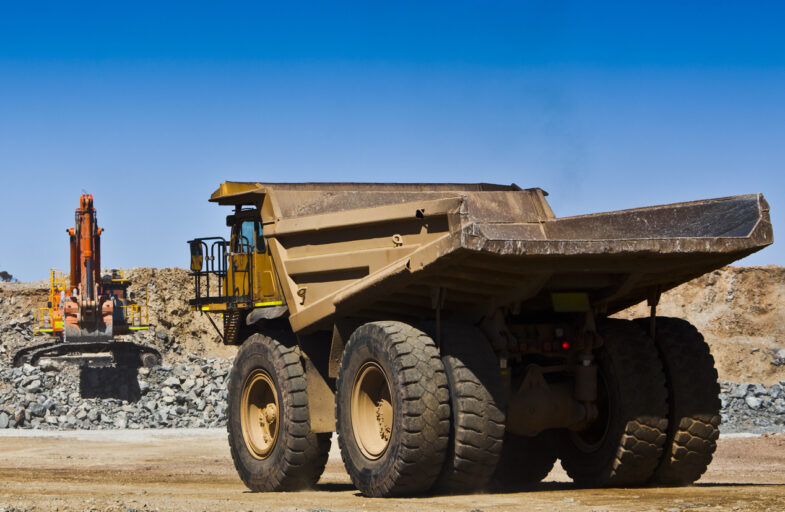
PLS Group shares (ASX:PLS) closed at a fresh 2026 low of A$2.90 to start the week, as stuttering lithium markets, and cost overruns and a delayed production timeline overshadowed the strategic ambition of the company’s landmark P2000 expansion at Pilgango.
The PLS share price has fallen 52% over the past six months, with a 29.78% drop in the past month alone, as buyers seem happy to stay away from lithium stocks. The pace of selling has been relentless, pushing PLS’s RSI to just 21.49. That reading places the stock deep in technically oversold territory, one that typically signals selling pressure approaching exhaustion. That has done little to help the sector so far, as weak prevailing lithium spot prices, a global supply overhang in the spodumene market, and now, fresh concerns about the economics of PLS’s flagship growth project all weighing.
The P2000 Final Investment Decision
PLS Group formally approved the Final Investment Decision (FID) for its P2000 Project, centred on the construction of the new Jimmagunya processing facility at Pilgangoora in Western Australia’s Pilbara region. The project will nearly double annual spodumene concentrate production capacity to approximately 2.0 million tonnes per annum (Mtpa), cementing PLS’s position as one of the world’s largest hard-rock lithium producers by volume.
The expansion carries a total project capital cost of A$2.50 billion to A$2.55 billion, with PLS confirming it will fund the build entirely from its existing A$2.3 billion cash reserve (as of June 30), supplemented by ongoing operational cash flows. No equity raising or new debt facilities are required, a meaningful distinction in a sector where balance sheet stress has become increasingly common.
Top Australian Brokers
- Pepperstone - Top Australian broker - Read our review
- eToro - Invest in ASX and international shares - Read our review
The project also delivered a significant resource upgrade. Advances in processing technology allowed 67 million tonnes of material previously classified as waste to be reclassified as ore, expanding total Ore Reserves by 23% and contained lithium metal by 31%.
However, the headline numbers that unsettled markets were on the cost side, as PLS guided to a 10-year average steady-state operating cost of A$620 per tonne (FOB), a figure roughly 10% above prior consensus broker estimates. Infrastructure spending came in at A$600 million to A$650 million, more than double some prior broker forecasts. First production is now targeted for the September quarter of 2029, followed by a six-month ramp-up period, pushing meaningful revenue contribution from P2000 into 2030 at the earliest.
Broker Cut Targets, Remain Bullish
Both Macquarie and Barrenjoey maintained positive ratings on PLS following the FID announcement, though both trimmed their price targets in response to the revised project economics.
Macquarie reduced its price target by 5% to A$5.25, retaining an Outperform rating. The broker noted that the total project capital of A$2.50 billion to A$2.55 billion was broadly in line with its own modelling (within 2% of its prior forecast) and trimmed its FY29 and FY30 earnings estimates by 6% and 7% respectively to account for the higher operating cost guidance. Macquarie’s view is that the market reaction represents an over-discounting of near-term capital expenditure, given the project’s long-term strategic value and the company’s strong cost position on the global lithium supply curve.
Barrenjoey was more pointed in its revisions, cutting its price target to A$4.40 from A$5.00, representing a 14% reduction in its underlying valuation, while keeping an Overweight rating. Barrenjoey’s analysts highlighted the infrastructure capex figure as the primary surprise, noting it came in more than double their A$280 million forecast at A$600 million to A$650 million. That single line item drove cumulative three-year capex approximately A$295 million above the bank’s prior expectations. The firm also flagged the production timeline as a concern, with first output arriving roughly nine months later than the bank had previously modelled.
Despite these revisions, both brokers continue to see material upside from current levels. At A$2.90, PLS is trading at a discount of more than 50% to Macquarie’s target and approximately 52% below Barrenjoey’s revised target.
PLS Group’s commitment to the P2000 expansion is a bold bet on the long-term structural demand for lithium, but with costs running above expectations, and production three years away, the markets have been voting with their dollars as analysts continue to offer support.
Bull Case:
- RSI at 21.49 signals extreme oversold conditions and potential near-term stabilisation
- Fully funded expansion via A$2.3B cash reserve eliminates dilution and debt risk
- Capacity doubling to 2.0 Mtpa locks in long-term scale and cost-curve advantage
- 23% reserve upgrade expands mine life and improves long-run project economics
- Both Macquarie and Barrenjoey maintain buy-equivalent ratings with 50%+ upside to targets
Bear Case:
- Operating cost guidance of A$620/t is 10% above prior consensus broker estimates
- First P2000 production delayed to late 2029, leaving earnings exposed for three years
- Infrastructure capex of A$650M was more than double Barrenjoey’s prior forecast
- Weak lithium spot prices leave thin margin buffer against guided operating costs
- Prolonged global supply overhang risks suppressing spodumene prices through 2028




