



Karoon Energy shares (ASX: KAR) closed Monday’s session at A$1.56, down 12.89% on the day, in one of the stock’s heaviest single-session declines in recent memory.
The move was important not only for its size, but for pushing the KAR share price below both its 50-day SMA at A$1.75 and its 200-day SMA at A$1.77 on the day. This flips the script somewhat for holders after a period of relative price stability, pushing the stock into negative year-to-date territory, now sitting at -0.32% for 2026.
Why Was Guidance Cut?
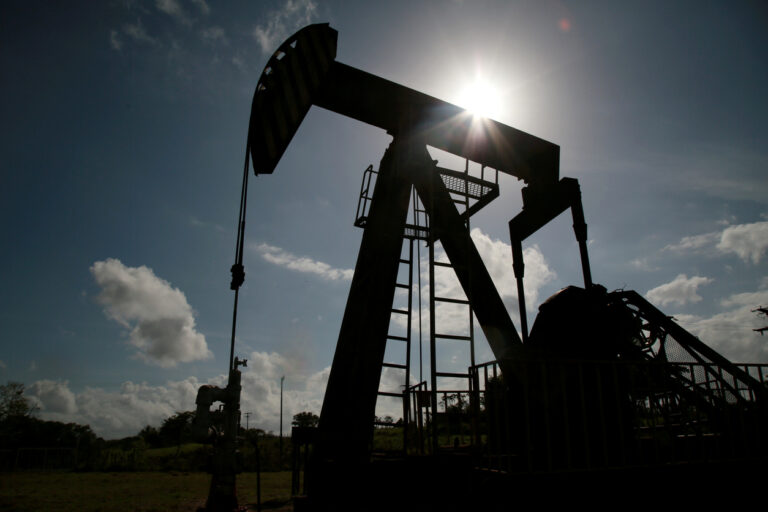
The catalyst for the trimmed guide was an electrical fault identified in a newly installed downhole power cable at the SPS-92 well at the Bauna field, Karoon’s primary producing asset offshore Brazil. The cable feeds the well’s Electrical Submersible Pump (ESP), a critical component for artificial lift in deepwater oil production.
Upon identifying the fault, Karoon initiated a controlled shutdown of the well to protect downhole equipment, a prudent step that nonetheless carries an immediate production cost.
Top Australian Brokers
- Pepperstone - Top Australian broker - Read our review
- eToro - Invest in ASX and international shares - Read our review
The company estimates the fault will defer approximately 3,500 barrels of oil per day (bopd) until a rig-based intervention can replace the faulty cable system. Crucially, Karoon has emphasised that this represents a timing issue rather than a permanent loss of reserves. The oil remains in the ground and is expected to be recovered once repairs are completed, with the intervention to be executed using a contracted rig.
Bauna’s full-year production target has been cut to 5.4 to 5.7 million barrels (MMbbl) from a prior range of 6.0 to 6.7 MMbbl, representing a reduction of approximately 13% at the midpoint. At the group level, total calendar year 2026 production guidance has been revised down to 6.6 to 7.2 million barrels of oil equivalent (MMboe) from 7.2 to 8.2 MMboe, a 10% reduction at the midpoint. Guidance for the Who Dat asset in the Gulf of Mexico was left unchanged.
Expenses Rise
The lower production volumes have also had a predictable knock-on effect on unit economics. Because offshore oil operations carry a largely fixed cost base, spreading those costs across fewer barrels pushes per-barrel expenses higher. Unit production cost guidance has accordingly been revised upward to US$15 to US$16 per barrel of oil equivalent (boe), compared with the prior range of US$12 to US$15 per boe, a meaningful margin headwind.
On the financial recovery side, Karoon has indicated it is actively pursuing insurance claims and equipment warranty remedies. The company noted that insurance recovery may partially offset lost production revenue and could reimburse substantially all repair costs, though this remains subject to policy terms and formal confirmation from the insurer. While that would be meaningful, claim assessments and settlements in the offshore energy sector typically involve extended timelines, leaving a gap in near-term cash flow that markets must factor in.
A Pattern of Setbacks
What makes Monday’s announcement particularly challenging for sentiment is the fact that it is not an isolated incident. Earlier in 2026, Karoon was forced to cut guidance for its Who Dat field in the Gulf of Mexico following a flexible riser failure, a separate but equally disruptive equipment event that resulted in an approximately 41% reduction to Who Dat’s production target for the year.
Taken together, the two guidance reductions mean that Karoon’s midpoint group production target for CY26 has fallen by roughly 20% since the start of the year, from approximately 8.65 MMboe to around 6.9 MMboe. That cumulative erosion of guidance is a pattern that markets tend to penalise with a sustained valuation discount, as it raises questions about the reliability of forward estimates and the robustness of the company’s asset maintenance and equipment management practices.
Bauna’s capital expenditure profile has also been under pressure. Prior well interventions at the field have encountered weather delays and mechanical complications, which previously pushed Bauna 2026 capex guidance higher, from an initial range of US$61 million to US$74 million to a revised US$89 million to US$97 million. The SPS-92 cable fault adds another layer of unplanned intervention cost to an already elevated capex budget, even if insurance proceeds ultimately absorb a portion of the expense.
What Lay Ahead?
From a valuation standpoint, Karoon was trading at a modest earnings multiple relative to its producing asset base prior to these setbacks. The pullback could represent a more attractive entry point for those willing to look through near-term operational noise. That argument is strengthened by the fact that Karoon remains largely unhedged on crude oil, meaning any sustained elevation in Brent prices would translate directly into operating cash flow once production is restored.
Technically, however, the picture is clearly with the bears. Trading below both the 50-day and 200-day SMAs with the stock in negative YTD territory removes near-term momentum and places the burden of proof firmly on management to demonstrate that the operational issues at both Bauna and Who Dat are being resolved in a timely and cost-effective manner.
Bull Case:
- Deferred barrels remain in the ground, supporting 2027 production and cash flow recovery
- Insurance and warranty claims could reimburse substantially all repair and lost revenue costs
- Unhedged crude exposure means strong Brent prices amplify any production volume recovery
Bear Case:
- Two major guidance cuts in four months raise serious concerns about operational execution reliability
- Higher unit costs of US$15-16 per boe compress margins and near-term free cash flow materially
- Breaking below both 50-day and 200-day SMAs signals technically damaged chart, inviting further selling




