



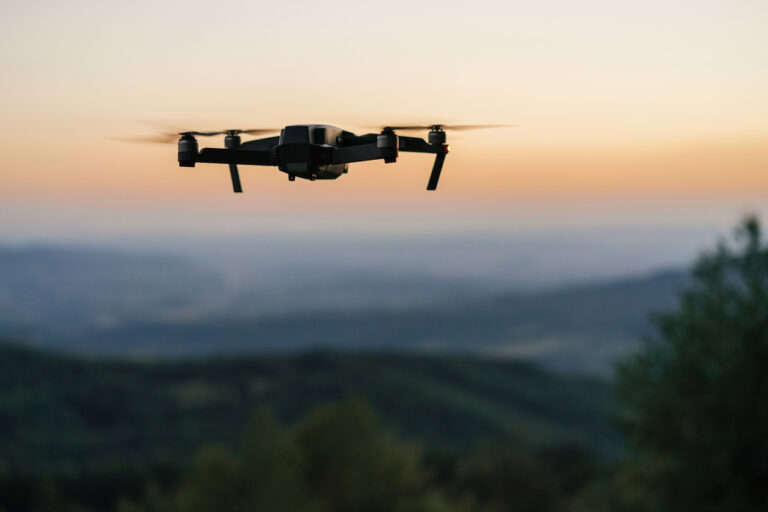
DroneShield shares (ASX: DRO) climbed 5.26% to close at A$1.70, offering some relief for long-suffering shareholders. The DRO share price ended September down 3.95% for the month and remains 48.95% below where it started the year, a stark reminder of how far sentiment has shifted from the speculative highs from late last year.
Momentum has shifted temporarily at least, as DroneShield Ltd secured a position on a major US homeland defence procurement panel worth up to US$500 million, providing a tangible catalyst for a stock that has spent much of the year under significant selling pressure. While no orders are guaranteed under the contract structure, the award marks a meaningful step deeper into the US defence ecosystem for the company.
Approved List, As Deals Await
DroneShield LLC, the company’s US subsidiary, was awarded a position on the Domestic Shield Indefinite Delivery, Indefinite Quantity (IDIQ) contract administered by Joint Interagency Task Force 401 (JIATF-401). The contract carries a ceiling value of US$500 million, equivalent to approximately A$716 million, over a three-year period.
The Domestic Shield program is designed to accelerate the deployment of counter-unmanned aircraft systems (C-UAS) technology across US military installations, defence-critical infrastructure, and other high-priority sites. The IDIQ structure is a standard US Department of Defense procurement mechanism that pre-approves a panel of vendors, enabling government agencies to issue task and delivery orders quickly without running a full competitive tender each time. Critically, the ceiling value represents the maximum that could theoretically flow through the contract vehicle across all awarded vendors combined, not a committed purchase order to DroneShield specifically.
The company noted it cannot yet quantify any revenue amounts flowing from the award and confirmed it will announce any material orders separately as they arise. DroneShield joins other pre-approved vendors on the panel, including Allen Control Systems, Digital Force Technologies, and Echodyne, meaning it will need to compete for individual task orders as they are released.
Top Australian Brokers
- Pepperstone - Top Australian broker - Read our review
- eToro - Invest in ASX and international shares - Read our review
Despite the caveats, the strategic significance should not be dismissed. Being on an IDIQ panel eliminates a substantial layer of procurement friction. US government agencies can now engage DroneShield directly and rapidly when operational requirements demand it, a meaningful advantage in a defence environment where speed of deployment is increasingly valued.
Recent Financials
DroneShield’s most recent half-year results for 1H 2026 showed record revenue of A$125.8 million, up 74% year-on-year, reflecting strong demand for its C-UAS product suite including systems such as the DroneSentry-X Mk2. The company reaffirmed full-year FY2026 revenue guidance of A$250 million to A$270 million, supported by A$240.4 million in already committed revenue, representing approximately 89% to 96% coverage of the guidance range.
The balance sheet remains a genuine strength. DroneShield holds A$180 million in cash with zero debt, providing a substantial runway to fund production scaling, inventory build, and research and development without needing to return to equity markets in the near term.
However, profitability remains elusive. The company recorded a statutory net loss of A$32.2 million in 1H 2026, alongside an underlying EBITDA loss of A$12.4 million, a deterioration from the A$8.0 million underlying EBITDA profit delivered in the prior corresponding period. Gross margins compressed from 65.3% to 60.0% as the company scaled its cost base to meet growing demand. Recurring software revenue, a higher-quality revenue stream that markets tend to value more favourably, tripled to A$11.5 million, though it remains a relatively modest portion of total revenue.
What Lay Ahead?
The Domestic Shield IDIQ award is best understood as an option on future revenue rather than a near-term earnings driver. The contract opens a door, but signing deals will be competitve. The three-year timeframe of the contract aligns reasonably well with the company’s existing FY2026 and medium-term growth ambitions, and the US homeland defence budget backdrop remains supportive given the proliferation of small commercial drones as security threats.
With DroneShield shares down close to 75% from the 52 week highs, there has been plenty of pressure on bulls over this past year, and Q3 of calendar 2026 has just drawn to a close with the stock down 29.75%. Momentum is firmly with the bears for the time being, but if the company can begin to sign some meaningful contracts that shift the tide to profitability, there is scope for a snapback. The price came close to testing the 50 day SMA as the month drew to a close, with a break above on strength, and confirmation a potential first step towards a reversal.




