



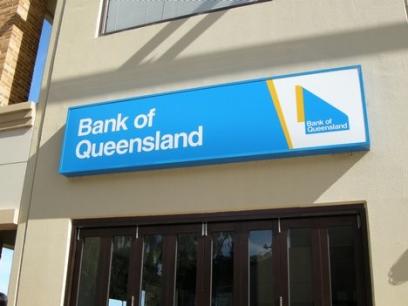
Bank of Queensland shares (ASX: BOQ) touched a new 52-week low on Monday, extending a protracted period of underperformance that has left the regional lender trading at levels not seen in over a year and raising fresh questions about its ability to compete effectively in Australia’s fiercely contested banking market.
The BOQ share price rounded out the day flat at A$6.34 after dipping to A$6.26 earlier in the session, marking a new 52-week low for the Brisbane-based lender. The stock has now declined 16.14 percent over the past 12 months and sits 28.12 percent lower over five years, a period during which higher interest rates have generally supported profitability across the Australian banking sector. The underperformance stands in stark contrast to many of BOQ’s peers, who have benefited from improved net interest margins as the Reserve Bank of Australia raised rates aggressively through 2022 and 2023.
Why Are Bank of Queensland Shares Underperforming?
At the heart of BOQ’s struggles lies a persistent inability to match the operating performance of similarly rated regional Australian banks. S&P Global Ratings has explicitly noted that BOQ’s operating performance, lending growth, and profitability have lagged peers, with margins under pressure from competition on both sides of the balance sheet. The ratings agency revised BOQ’s outlook to negative in May 2024, citing these ongoing challenges.
Top Australian Brokers
- Pepperstone - Top Australian broker - Read our review
- eToro - Invest in ASX and international shares - Read our review
Compounding BOQ’s operational challenges is a significant regulatory overhang. Back in 2023, both the Australian Prudential Regulation Authority and AUSTRAC imposed enforceable undertakings on the bank after uncovering serious, long-running deficiencies in risk management, compliance, and anti-money laundering systems. Media reports at the time noted that BOQ had failed to correct systemic risk-management issues detected almost a decade earlier, prompting regulators to appoint an external auditor and require additional capital buffers.
In May 2025, AUSTRAC accepted material deviations to BOQ’s remedial action plan, acknowledging the bank’s cooperation but confirming that BOQ remains under close regulatory oversight as it works to fix its systems and controls. The regulatory actions have resulted in higher compliance and remediation costs, elevated capital requirements that dilute return on equity, and ongoing headline risk that has weighed on the bank’s valuation multiple.
The combination of regulatory constraints and weak underlying performance has led some analysts to question whether BOQ possesses the governance and risk culture necessary to execute a complex, multi-year transformation while simultaneously addressing compliance shortfalls.
Transformation Risks and Technology Struggles
BOQ has been engaged in a multi-year technology and transformation programme that includes the integration of ME Bank and the use of the Virgin Money brand. The strategy aims to position BOQ as a simpler, more focused institution, but execution has proven difficult and costly.
Shareholder and customer commentary has consistently criticised the bank’s technology performance, citing outages, slow digital offerings, and confusion around the myBOQ app and various brand experiences. Multiple consumer reports over recent years have referenced branch closures, poor digital experiences with outdated websites and unreliable apps, and frustration that BOQ’s technology has not kept pace with the major banks or nimble digital competitors.
The perception of a weak franchise and inferior technology creates a vicious cycle: BOQ risks losing higher-quality customers to competitors and is forced to price aggressively on both deposits and loans to retain or attract balances, further compressing margins. For a regional bank with limited scale, the fixed costs of remediation and transformation are harder to absorb, making it difficult to achieve cost-to-income ratios comparable to larger peers.
What Next for BOQ
The path forward for BOQ hinges on its ability to demonstrate tangible progress across multiple fronts: stabilising net interest margins, growing market share without sacrificing profitability, completing its regulatory remediation, and delivering on the promised benefits of its transformation programme. If the bank can achieve these goals, there is scope for the shares to move higher, yet this is far from certain.
Sentiment appears to be clear, with the market’s willingness to push BOQ to new lows suggesting that the bearish interpretation remains dominant. Concerns about governance, execution risk, and structural competitive disadvantages continue to weigh on sentiment, and any missteps in the remediation or transformation programmes could trigger further downgrades or capital requirements.
For now, BOQ offers income-focused investors a high yield and the potential for upside if the turnaround materialises, but the risk-reward profile remains skewed to the downside until the bank can demonstrate sustained improvement in both operational performance and franchise perception. If we are looking for a view on buying opportunity or value trap, we would want to see clear signs that sentiment is beginning to turn rather than attempting to catch a falling knife here.
Bull Case:
- Transformation spending has peaked; cost savings and efficiency gains may drive earnings leverage ahead
- Regulatory remediation progress could lift overhang; AUSTRAC accepted revised plan signals cooperation and pathway forward
- High dividend yield offers income support; any earnings growth would support valuation re-rating from current depressed levels
Bear Case:
- Persistent operational underperformance versus peers shows structural competitive disadvantages in lending growth and margins
- Regulatory overhang and remediation costs remain material drag on profitability and return on equity for years
- Weak technology and franchise perception risk customer attrition; forces aggressive pricing that further compresses margins




