



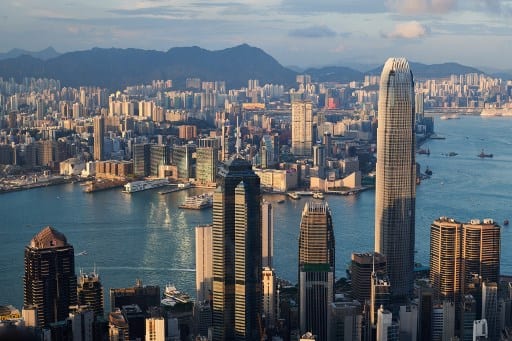
The Hang Seng Index stands as one of Asia’s most influential stock market benchmarks, offering Australian investors exposure to Hong Kong’s dynamic economy and some of the region’s largest corporations. As global markets become increasingly interconnected, understanding this key Asian index has become essential for diversified investment portfolios.
The Hang Seng Index is Hong Kong’s primary stock market indicator, comprising the largest and most liquid companies listed on the Hong Kong Stock Exchange. Established in 1969, this market-capitalization weighted index serves as the benchmark for Hong Kong’s equity market performance and reflects the territory’s position as a major international financial hub.
Hang Seng Index Chart
The Structure
The index tracks companies across various sectors, including finance, technology, real estate, and consumer goods. These companies represent approximately 60% of the total market capitalization of all stocks listed on the Hong Kong Stock Exchange, making it a comprehensive representation of the market’s overall health.
The Hang Seng Index primarily reflects Hong Kong’s role as a gateway between mainland China and international markets. Many of the index’s constituents are either Hong Kong-based companies with significant mainland China operations or Chinese companies listed in Hong Kong through various listing mechanisms.
The index captures several key investment themes:
Top Australian Brokers
- Pepperstone - Top Australian broker - Read our review
- eToro - Invest in ASX and international shares - Read our review
- Financial Services: Major banks and insurance companies that facilitate trade between China and the rest of the world
- Technology Innovation: Leading Chinese technology companies that have chosen Hong Kong as their international listing venue
- Real Estate Development: Property companies capitalizing on Hong Kong’s limited land supply and China’s urbanization
- Consumer Discretionary: Companies benefiting from China’s growing middle class and consumption patterns
Leading Companies
The Hang Seng Index features some of Asia’s most recognizable corporate names, including Tencent, Alibaba, ICBC, China Mobile, AIA Group, BYD, Baidu, and JD.com.
Tencent Holdings dominates the technology sector, operating China’s largest social media and gaming platforms. As one of the world’s most valuable technology companies, Tencent significantly influences the index’s performance.
Alibaba Group represents e-commerce and cloud computing, serving as China’s answer to Amazon and providing exposure to the country’s digital economy transformation.
ICBC and other major Chinese banks offer exposure to the financial services sector, benefiting from China’s economic growth and increasing financial sophistication.
China Mobile and other telecommunications giants provide infrastructure for China’s digital revolution and 5G network deployment.
AIA Group represents the insurance sector, capitalizing on Asia’s growing wealth and insurance penetration rates.
ETFs Tracking the Index
Australian investors can gain exposure to the Hang Seng Index through several Exchange-Traded Funds (ETFs) available on the Australian Securities Exchange (ASX):
iShares Core MSCI Hong Kong IMI Index ETF (IHK) offers broad Hong Kong market exposure, including Hang Seng constituents alongside smaller companies.
Vanguard FTSE Asia ex Japan Shares Index ETF (VAE) provides diversified Asian exposure that includes significant Hang Seng representation.
BetaShares Asia Technology Tigers ETF (ASIA) focuses specifically on Asian technology companies, many of which are Hang Seng constituents.
Trading Hours in Australia (AEST)
Morning Session: 12:30 PM – 4:00 PM AEST
Afternoon Session: 6:00 PM – 10:00 PM AEST
These hours provide Australian investors with opportunities to react to overnight developments in global markets, as Hong Kong trading occurs during Australian business hours. This timing advantage allows for more responsive portfolio management compared to European or American markets.
Conclusion
Australians considering Hang Seng exposure should evaluate several factors, including political risk, currency, regulatory environment, aswell as market volatility.
The Hang Seng Index represents an interesting opportunity if you are looking for Asian market exposure and diversification beyond domestic markets. You can also gain access to the market using ETFs, or by taking US listed versions of HK shares if you do not have a trading platform that supports the market directly.




