



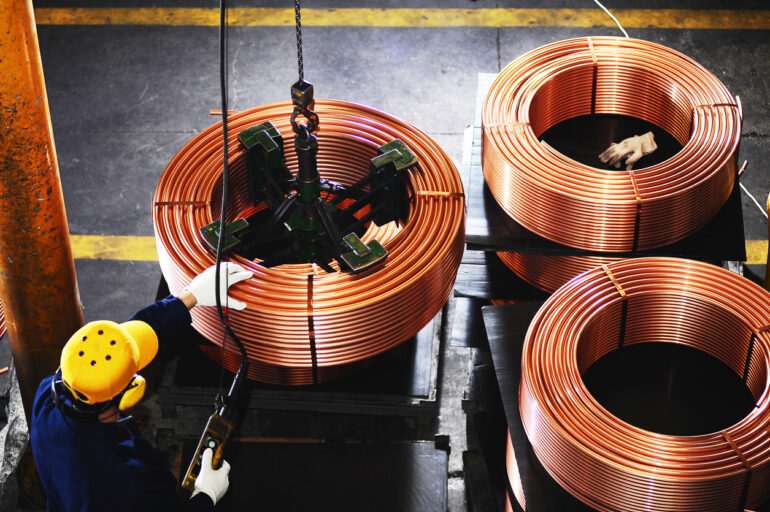
Copper is one of the cleaner long-term commodity themes because it sits behind electrification, grid expansion, renewable energy, data centres, AI infrastructure, electric vehicles and industrial growth.
BHP expects global copper demand to rise from around 34 million tonnes a year today to more than 50 million tonnes a year by 2050, and it estimates the world may need 10 million tonnes of additional new copper supply by 2035 to balance demand.
Doctor Copper?
Copper has long been known as “Doctor Copper” because demand for the metal is often seen as a useful signal for the health of the global economy. When factories, builders, manufacturers and infrastructure developers are busy, they need copper. When demand for copper weakens, investors often take it as a warning sign that economic activity may be slowing.
The reason is simple: copper is used almost everywhere. It is a key material in homes, offices, factories, power grids, transport networks, electronics, data centres and renewable energy systems. It is also an excellent conductor of electricity and heat, which makes it especially important as the world uses more electricity.
That is why copper has become one of the most important metals in the energy transition. Electric vehicles, charging networks, solar farms, wind farms, batteries, transmission lines and grid upgrades all need copper. So while copper is still tied to the traditional economic cycle, it also has a powerful long-term growth story behind it.
Top Australian Brokers
- Pepperstone - Top Australian broker - Read our review
- eToro - Invest in ASX and international shares - Read our review
For investors, this creates a clear trade-off. Copper stocks can be volatile because they are exposed to commodity prices, construction cycles, China demand, inflation, interest rates and recession fears. When investors worry about a global slowdown, copper prices and copper shares can fall quickly.
But the long-term case remains compelling. Recessions do not last forever, and the world still needs more copper to build, electrify and modernise. That is why high-quality copper shares can become interesting even when the market turns cautious. The key is to separate strong producers with real assets and cash flow from more speculative explorers that may need years, and plenty of capital, before they reach production.
The sector case is clear, and with copper spot prices up 30% over the past year, there have been plenty of winners. But which copper shares continue to shape up the best from here?
Top Copper Shares
| Company | BHP Group | Sandfire Resources | Capstone Copper | South32 |
|---|---|---|---|---|
| Latest price | A$58.70 | A$18.08 | A$13.11 | A$4.06 |
| One-year share price move | +51.5% | +72.0% | +78.9% | +38.1% |
| Market cap | A$298.2b | A$8.44b | A$10.01b | A$18.06b |
| P/E | 20.8 | 43.0 | 17.0 | 33.6 |
| Forward P/E | 15.6 | 10.7 | 17.4 | 12.7 |
| Dividend yield | 3.3% | 0.0% | 0.0% | 2.3% |
| Revenue TTM | A$54.0b | A$1.29b | A$2.48b | A$5.91b |
| EBITDA | A$26.3b | A$562.1m | A$897.8m | A$1.19b |
| Profit margin | 19.0% | 10.8% | 17.2% | 5.4% |
| ROE | 24.7% | 7.5% | 12.5% | 4.2% |
| Quarterly revenue growth YoY | 10.8% | 17.3% | 22.3% | -2.6% |
| Beta | 0.80 | 1.58 | 2.08 | 0.64 |
| 52-week range | A$34.11–A$62.72 | A$10.11–A$21.75 | A$7.35–A$17.83 | A$2.45–A$4.85 |
| Average price target | A$55.06 | A$18.80 | A$16.07 | A$4.67 |
BHP Group (BHP)
BHP is the highest-quality copper exposure in this group, but it is not a pure copper only name. It is a diversified mining giant with copper, iron ore, coal and potash exposure, with diversification that makes it a great fit for blue-chip investors. BHP gives you serious copper leverage without taking the full risk of a smaller single-commodity producer.
The copper case has also become much stronger, with BHP the world’s largest copper producer, with production that grew by around 30% in the four years to 2025. Copper also now made up more than half of group underlying earnings in the first half of FY2026 for the first time, with FY26 group copper production guidance of 1.9 million to 2.0 million tonnes.
With copper production coming from Escondida, Spence and Copper South Australia, BHP also owns a 33.75% share of Antamina whilst advancing copper growth options in Chile, Australia, Argentina and the United States.
The share price has already moved, with BHP shares up from A$38.75 to A$58.70 over the past year, a gain of roughly 51.5% before dividends. That is a strong return for a mega-cap miner, and it means the market is already rewarding BHP’s copper exposure and stronger commodity backdrop.
The investment case also remains sensible. A P/E of 20.8, forward P/E of 15.6, ROE of 24.7%, and dividend yield of 3.3% give BHP a better balance of quality, income and risk than the smaller names. You are unlikely to get the biggest copper upside from BHP, but you are also less exposed to a single mine, single project, financing shock or operational setback. With BHP shares now also commanding their place as the largest market cap stock on the ASX, there is plenty of index tracking action.
Capstone Copper (CSC)
Capstone Copper is one of the more direct copper producers available through the ASX, although it is headquartered in Canada. CSC operates copper assets across the Americas, including Pinto Valley in Arizona, Cozamin in Mexico, Mantos Blancos and Mantoverde in Chile, plus the Santo Domingo development project.
This is a much purer copper exposure than BHP or South32, and if copper prices rise and Capstone executes well, the stock should respond more directly. The company’s operating portfolio is built around copper, and its growth pipeline is tied to projects and expansions in established copper districts.
The share price has performed strongly. CSC shares have risen from A$7.33 to A$13.11 over the past year, a gain of roughly 78.9%. That makes it one of the best performers here, but not necessarily the most stretched. On current data, it trades on a P/E of 17.0, with a profit margin of 17.2% and quarterly revenue growth of 22.3%..
Capstone’s 2026 guidance is also useful, with the company guiding for 200,000 to 230,000 tonnes of copper in 2026, with C1 cash costs of US$2.45 to US$2.75 per payable pound of copper. It has also pointed to growth potential from Mantoverde Optimized and its Santo Domingo pipeline.
The risk is volatility. Capstone has a beta above 2, and copper producers with operating assets across different jurisdictions can be hit by strikes, cost inflation, grade changes, maintenance outages and geopolitical risk. It is not a low-risk stock.
Capstone Copper offers more copper purity than BHP, stronger current fundamentals than most developers, and a more investable operating base than pure explorers, yet that also comes with greater risk.
Sandfire Resources (SFR)
Sandfire Resources is an Australian-listed copper producer with major operating assets in Spain and Botswana. Its principal operations are the MATSA Copper Operations in Spain and the Motheo Copper Operations in Botswana, while it also has exposure to projects such as Black Butte in the United States and Kalkaroo in South Australia through its strategic alliance with Havilah.
This is the best copper growth producer on the list. Sandfire is not as diversified as BHP and not as global-platform-like as Capstone, but it is a meaningful copper producer with a clear copper focus.
The share-price performance has been strong, with SFR shares rising from A$10.51 to A$18.08 over the past year, a gain of ~ 72.0%. The market has clearly already started to price in the copper story, operational recovery and stronger earnings potential, yet the operational case continues to improve.
The valuation picture is mixed compared to some of the other players here, yet still interesting. The trailing P/E is high at 43.0, but the forward P/E is much lower at 10.7, with the market expecting a step-up in earnings. Quarterly revenue growth is 17.3%, and quarterly earnings growth is strong, which gives Sandfire one of the better earnings catch-up cases in the group.
Sandfire is the largest locally listed pureplay copper producer, and deserves a place on the list.
South32 (S32)
South32 is a diversified mining stock with exposure to aluminium, alumina, manganese, silver, lead, zinc and copper. Its copper link is mainly through Sierra Gorda in Chile, where South32 owns a 45% interest, plus longer-term critical minerals exposure through Hermosa in the United States.
This is not a pure copper play, and is better thought of as a diversified base-metals and critical-minerals company with a copper kicker. That makes it less exciting than Capstone or Sandfire if copper is what you are really interested in, but it is a bit more balanced if you want broader resource exposure.
The share price has performed well, along with many of the names here. S32 shares have risen from A$2.94 to A$4.06 over the past year, a gain of 38.1%.
South32’s Sierra Gorda asset is the key copper point, and is a large open-pit copper mine in northern Chile, producing copper with molybdenum and gold by-products. Sierra Gorda made a record quarterly distribution of US$135 million in its March 2026 quarterly update, while annual production guidance was maintained for all operations.
The valuation case is reasonable. South32 trades on a forward P/E of 12.7, has a dividend yield of about 2.3%, and has the lowest beta in this group at 0.64. That makes it a more defensive way to get some copper and critical-minerals exposure.
The risk is that copper is only one part of the portfolio. If you are specifically bullish on copper, South32 may not move as directly as SFR or CSC. Earnings are also still exposed to aluminium, manganese and other commodity cycles.




