



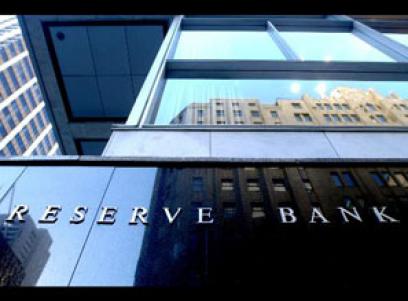
Expectations that the Reserve Bank of Australia will raise interest rates at its 29 September 2026 meeting are building rapidly, with National Australia Bank, Deutsche Bank, UBS and Morgan Stanley all now forecasting a 25-basis-point increase that would take the cash rate from 4.35% to 4.60%.
The hawkish shift, driven by stubborn core inflation and a stronger-than-expected global growth backdrop, has propelled the Australian dollar to four-month highs and forced a broad repricing across currency, bond and equity markets.
The foreign exchange market has been the clearest barometer of the shifting outlook, with the Australian dollar pushed to around 72 US cents, its strongest level in four months, as traders priced in interest rate differentials favouring Australia against peers such as the United States, where the Federal Reserve is not expected to match the RBA’s tightening. In fixed income, policy-sensitive three-year Australian government bond yields spiked above 4.65%, reaching multi-year highs and offering attractive carry for fixed-income markets.
What Is The Interest Rate Outlook For This Year?
Money markets are currently assigning roughly a 50% probability of a rate hike in September, with a move by November almost fully priced in, a positioning split that leaves both the currency and the rates market exposed to volatility in either direction around the meeting.
Top Australian Brokers
- Pepperstone - Top Australian broker - Read our review
- eToro - Invest in ASX and international shares - Read our review
The catalyst for the forecast revisions was the July Consumer Price Index release. While headline inflation eased to 3.5%, the trimmed mean measure remained stuck at 3.6% on an annual basis, well above the central bank’s 2% to 3% target band.
NAB noted that inflation had run warmer than the RBA anticipated in August, arguing the Board would be compelled to follow through on its warning that it would tighten further if upside risks materialised. Morgan Stanley shifted its base case to a September move, contending that the broad-based nature of July’s price increases makes the RBA’s third-quarter inflation targets nearly impossible to achieve without immediate action. Commonwealth Bank and ANZ continue to favour November as the most likely timing, but both have explicitly flagged September as a “live” meeting carrying substantial upside risk.
UBS provided the widest macro framing behind its 4.60% call. The bank pointed to domestic inflation pressures coinciding with a global expansion powered by the artificial intelligence investment cycle and a surging trade cycle, conditions that are preventing international inflationary pressures from cooling as quickly as anticipated. That synchronised backdrop, UBS argued, raises the risk that central banks more broadly will need to keep policy restrictive for longer, reducing the scope for the RBA to stand apart from a hawkish global trend.
Deutsche Bank’s chief economist described Australia’s underlying inflation as “unacceptably high”, a characterisation that captures how far the consensus has moved in a short period.
The Case For No Change
Not everyone has followed, however, with Westpac the outlier among the Big Four banks, maintaining its forecast that the RBA will hold the cash rate at 4.35% for the remainder of 2026. Westpac points to a cooling labour market, slowing wage growth and deteriorating household consumption under the weight of cumulative mortgage stress.
The political dimension is also sharpening, as Treasurer Jim Chalmers declined to comment directly on the rate path but observed that previous rate increases are already adding significant strain to households and growth, citing weaker national accounts data.
What To Expect
Looking ahead, if the RBA raises on 29 September, the Aussie could extend its rally as rate differentials widen further, front-end yields would likely push higher. Rate-sensitive corners of the ASX 200 such as technology stocks, real estate investment trusts and consumer discretionary names would face renewed valuation compression and rising interest expense. A hike would also intensify mortgage repayment pressure, with flow-on effects for retail spending and housing activity into late 2026.
If the Board holds in September but signals a November move, in line with the CBA and ANZ view, the currency may surrender part of its recent gains before markets re-engage with the tightening narrative ahead of the third-quarter CPI release in late October.
And if Westpac’s more dovish read proves correct, a sharp repricing lower in yields and the dollar could follow, offering relief to equities and heavily indebted households but raising questions about whether inflation has truly been contained.
The market is currently pricing a ~66% chance of a September move, with plenty of data to come before the meeting that could see further shifts in expectations. With ASX tech, and growth names pulling back on the day, there are some out there already playing out the hawkish scenario, and reducing risk leading in.
Bull Case:
- NAB, UBS, Deutsche Bank and Morgan Stanley convergence strengthens the September hike case.
- Trimmed mean inflation at 3.6% keeps pressure on the RBA to act.
- AI-driven global growth and trade boom support tighter policy and a firmer dollar.
Bear Case:
- Westpac’s hold call highlights cooling labour market and mounting mortgage stress.
- Markets price only 50% September odds, leaving the dollar vulnerable to a hold.
- A hike to 4.60% would squeeze households, REITs and consumer discretionary stocks further.




