



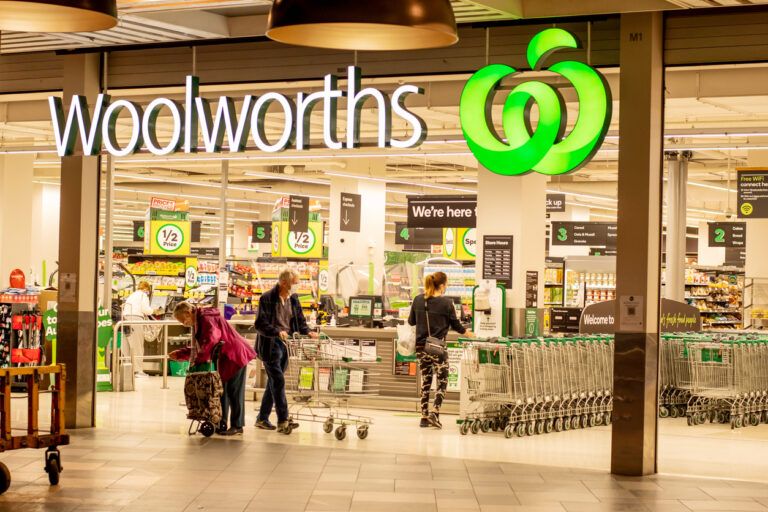
Woolworths Group shares (ASX: WOW) are trading at their highest level in over two years following a dramatic late-February earnings surprise that has propelled the Australian supermarket giant’s stock up 29.63% year-to-date to A$38.15, cementing its position as one of the ASX’s standout performers in 2026.
The Woolworths share price hit A$38.24, marking a multi-year peak and extending a powerful rally that began with an extraordinary 11.3% single-day jump on 25 February 2026. That session saw shares leap to approximately A$35.10 as the company delivered its first-half FY26 results, but momentum has continued through March and into April, despite broader market volatility and lingering concerns about interest rate policy.
The magnitude of the move has been striking: from trading in the low-to-mid A$29 range in late 2025, Woolworths has added roughly A$9 per share in value over just four months, rewarding holders who positioned ahead of the earnings inflection point.
Why Are Woolworths Shares Higher?
The fundamental driver behind the rally was Woolworths’ H1 FY26 result released in late February, which beat market expectations on multiple fronts. The company reported revenue of approximately A$37.1 billion for the half-year period, with trailing twelve-month revenue reaching around A$70.3 billion. While top-line growth was solid, the real surprise came in the company’s ability to navigate cost pressures better than feared.
Top Australian Brokers
- Pepperstone - Top Australian broker - Read our review
- eToro - Invest in ASX and international shares - Read our review
Basic earnings per share for the half came in at A$0.31, contributing to trailing twelve-month EPS of approximately A$0.49. Though that figure reflects the impact of one-off items and compressed margins, it was sufficient to convince markets that the worst of Woolworths’ operational challenges may be behind it.
The interim dividend announcement proved equally important to the bullish case. Management lifted the payout to A$0.45 per share fully franked, representing a 15.4% increase and comfortably exceeding consensus expectations of A$0.43. The board also confirmed continuation of the dividend reinvestment plan, with on-market purchases used to satisfy demand, a signal of confidence in cash generation and capital allocation discipline.
For income-focused investors, the combination of a growing dividend stream and perceived earnings stability has positioned Woolworths as a quasi-bond proxy in an uncertain macro environment, particularly as Reserve Bank of Australia commentary has kept rate-cut hopes in check.
Building Momentum: Analyst Upgrades Paved the Way
The February spike did not occur in isolation. A series of analyst upgrades through late 2025 and early 2026 had already begun to shift sentiment around the stock. In November 2025, JPMorgan upgraded Woolworths from neutral to overweight, raising its price target from A$29.50 to A$31.00, a move that triggered an immediate 2.3% share price gain and signalled that institutional opinion was turning more constructive.
Goldman Sachs followed in January 2026 with initiation coverage at Buy, suggesting approximately 20% upside based on turnaround momentum and operational improvements. These calls helped reframe Woolworths from a stalled defensive name into an active turnaround story with quality characteristics, priming the market for a positive reaction to any decent result.
The shift in broker sentiment attracted institutional flows and set the technical stage for the breakout. When the H1 numbers landed above expectations, momentum buyers and systematic strategies piled in, creating a feedback loop that has carried the stock to levels few anticipated at the start of the year.
The Valuation Debate Intensifies
Yet the rally has not been without controversy. Woolworths now trades at a trailing price-to-earnings ratio of approximately 75 times, a staggering 243% premium to its own ten-year median of around 22 times and vastly higher than the 18-21 times typical for large food retailers globally. The price-to-sales ratio has similarly stretched to roughly 10 times trailing revenue, historically elevated territory for a defensive supermarket operator.
Valuation bears argue that at current levels, Woolworths is priced for perfection, leaving little room for error. Even on forward estimates that assume some earnings recovery, the forward P/E of around 26 times remains at a substantial premium to sector peers. Analysis of the H1 result highlights a persistent margin squeeze: while revenue growth has been solid, profitability is being pressured by wage inflation, energy costs, and competitive discounting. The company appears to be buying growth at the expense of margin expansion, raising questions about the sustainability of the earnings trajectory if top-line momentum slows.
Some market observers have flagged the risk of a sharp de-rating should future quarters disappoint or if regulatory scrutiny of supermarket pricing intensifies. Public discourse around cost-of-living pressures and grocery inflation has kept Woolworths and rival Coles in the political spotlight, with ongoing complaints about pricing power and calls for greater transparency.
Defensive Appeal in Volatile Times
Despite valuation concerns, demand for Woolworths shares has remained robust, particularly from investors seeking defensive exposure amid macro uncertainty. The stock has benefited from its perceived role as a stable, cash-generative business with predictable revenue streams, characteristics that become more attractive when cyclical sectors face headwinds.
The timing of the dividend payment in early April, combined with the stock’s proximity to 52-week highs, has supported price action even as some investors book profits. Market commentary has noted Woolworths featuring as a top contributor in Australian equity funds, indicating strong institutional participation and a willingness to hold positions despite the rich valuation.
Technical factors have also played a role. The February gap-up broke through multiple resistance levels in the low-to-mid A$30s, triggering momentum-based buying. The subsequent move above A$38 has kept the stock in overbought territory by some measures, yet dips have been shallow and quickly absorbed, a sign that demand remains firm.
Looking Ahead: Can the Rally Continue?
The outlook for Woolworths from current levels hinges on several competing factors. Bulls point to the company’s dominant market position in Australia’s concentrated grocery duopoly, ongoing cost-out initiatives, and the potential for its digital and loyalty ecosystem to support better margins over time. The Everyday Rewards program and associated data analytics are increasingly viewed as a structural moat, enabling personalised marketing and supplier-funded promotions that enhance profitability beyond traditional retailing.
Bears counter that the valuation has run too far, too fast, and that any stumble in future quarters, whether from weaker comparable sales, regulatory intervention, or unexpected cost pressures, could trigger a rapid correction. The gap between current price and longer-term moving averages has widened considerably, and some technical indicators suggest the stock is due for consolidation.
Analyst consensus remains mixed, with many price targets still sitting materially below the current trading price, reflecting the speed of the recent re-rating. The next major test will come with the full-year FY26 result expected in the coming months, which will provide clarity on whether margin pressures are easing or intensifying.
Macro conditions will also matter. Should the RBA shift toward a more dovish stance or if inflation concerns abate, defensive names like Woolworths could face headwinds as investors rotate toward higher-beta opportunities. Conversely, any renewed volatility or economic uncertainty would likely support continued demand for quality defensives with reliable cash flows.
Bull Case:
- Dominant position in Australian grocery duopoly supports pricing power and market share
- Fully franked dividend growing 15%+ provides defensive income in uncertain macro environment
- Digital loyalty ecosystem and Everyday Rewards data create structural moat for margins
- Operational improvements and cost-out programs gaining traction after challenging period
- Strong institutional demand for quality defensives sustains momentum and limits downside
Bear Case:
- Trailing P/E of 75x represents 243% premium to historical average, extreme valuation
- Persistent margin squeeze as wage and energy costs outpace pricing ability
- Regulatory and political scrutiny of supermarket pricing threatens future profitability and reputation
- Forward P/E of 26x still rich even assuming earnings recovery materialises
- Overbought technicals and crowded positioning risk sharp correction on any disappointment
Woolworths’ shares journey to multi-year highs reflects a powerful combination of better-than-feared earnings, rising dividends, supportive analyst commentary, and strong demand for defensive exposure. Whether WOW can sustain its lofty valuation will depend on its ability to navigate margin pressures, maintain top-line momentum, and manage growing regulatory and political scrutiny, all while justifying a premium that has stretched well beyond historical norms and peer comparisons.




