



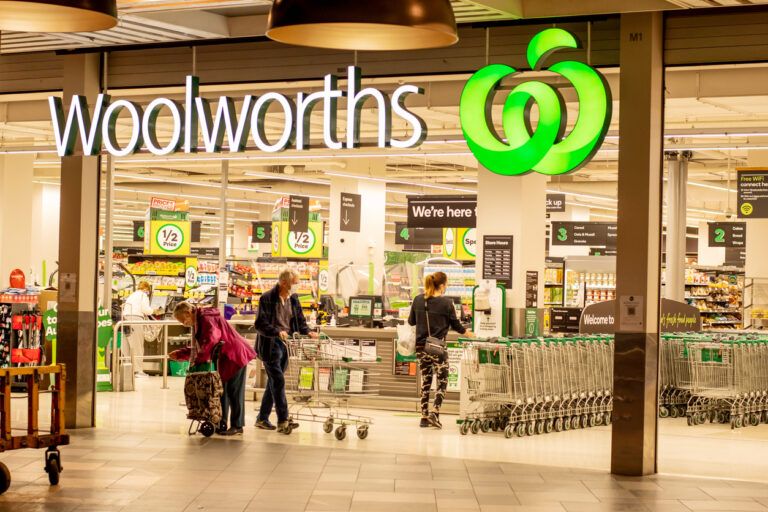
Woolworths Group shares (ASX:WOW) have climbed to their highest level in nearly three years, closing at A$38.55 to start the week strong. This caps an impressive period for bulls, who have seen the WOW share price rally 44% over eight months as markets reward the company’s operational recovery and cost-cutting progress.
The Woolworths share price has surged from around A$26.70 in October to current levels, with the stock breaking through previous resistance zones established in early 2024. The rally accelerated dramatically on 25 February 2026, when Woolworths posted its largest single-day gain on record (+12.97%) following a first-half earnings report that exceeded market expectations across all key divisions. Trading volumes have remained elevated since that catalyst, with the stock now up 30% year-to-date and significantly outperforming the broader ASX 200 index.
Woolworths shifts momentum
Woolworths’ first-half fiscal 2026 results, released in late February, revealed broad-based improvement across the business. Group sales rose across Australian Food, New Zealand Food, Big W, and the company’s business-to-business division, while earnings before interest and tax expanded in every segment, a marked contrast to the margin compression that plagued fiscal 2025.
Australian Food sales for the half climbed solidly, with the division regaining momentum after losing ground to rival Coles in prior periods. Management’s A$400 million cost-reduction programme showed tangible progress, with the company on track to achieve its run-rate savings target. New Zealand Food delivered particularly strong performance, with normalised EBIT rising approximately 40% as the rebranding of Countdown stores back to the Woolworths banner gained traction.
Top Australian Brokers
- Pepperstone - Top Australian broker - Read our review
- eToro - Invest in ASX and international shares - Read our review
More recent trading updates have sustained the positive narrative. In late April 2026, Woolworths reported Australian Food sales growth of approximately 5.4% year-on-year for the March–April period, or 6.5% excluding tobacco, demonstrating continued volume and value strength despite ongoing price investment to support customer budgets.
However, the headline numbers masked ongoing challenges. Statutory interim profit fell nearly 50% despite sales rising by more than A$1 billion. The profit decline was driven primarily by continued remediation charges related to historical staff underpayment issues, a legacy problem that has dogged the company for several years and raised questions about governance and internal controls.
Valuation debate
The 44% rally has reignited debate over whether Woolworths’ valuation is justified or stretched. Bulls point to the company’s defensive characteristics, dominant market share, and the earnings leverage embedded in the A$400 million cost-out programme. They argue that as one-off charges roll off and operational improvements compound, normalised earnings will grow faster than the modest top-line expansion, justifying a premium multiple for a high-quality, recession-resistant retailer.
Bears counter that the current share price already discounts a best-case scenario. They highlight structural margin headwinds from labour and energy inflation, limited pricing power in a competitive and politically sensitive market, and the risk that cost savings prove harder to extract than anticipated. The elevated valuation leaves the stock vulnerable to any disappointment in execution or macro conditions, particularly if consumer spending weakens or competitive intensity escalates.
Woolworths has delivered a remarkable turnaround over the past eight months, regaining market confidence through improved execution and disciplined cost management. Yet with shares now at three-year highs and trading on a premium valuation, the bar for continued outperformance is high, and the balance of risks has shifted from upside surprise to downside vulnerability as markets weigh whether the rally has run ahead of fundamentals.
Bull Case:
- HY26 results showed EBIT expansion across all divisions, confirming operational turnaround momentum.
- A$400 million cost-savings programme provides earnings leverage as one-off charges fade away.
- Dominant market share and A$70 billion revenue base offer defensive, resilient cash flows.
Bear Case:
- Valuation at 74x trailing P/E far exceeds peers, leaving minimal margin for error.
- Structural margin pressure from labour, energy costs limits profitability upside despite sales growth.
- Ongoing remediation charges and regulatory scrutiny create persistent governance and headline risk.




