



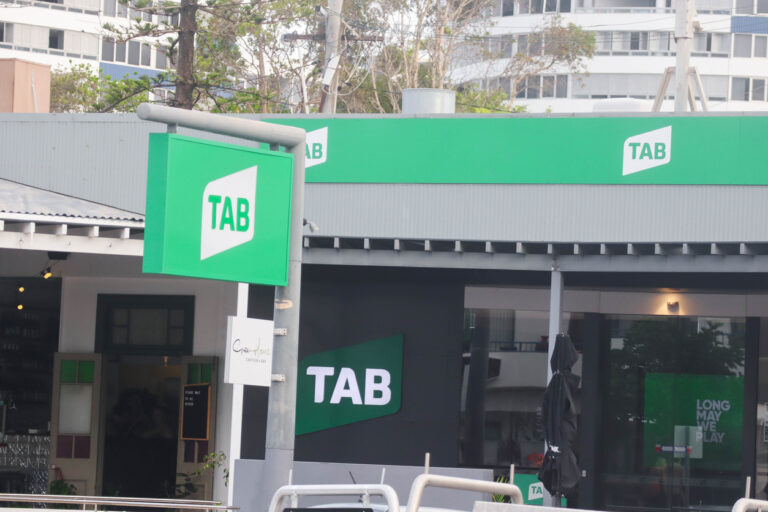
Tabcorp shares (ASX: TAH) closed Monday 0.74% higher at A$0.68 after testing the 52 week low intraday at A$0.66, offering tentative signs that panic selling may be abating following a brutal month that has erased nearly 39% of market cap.
The modest gain for TAH on Monday came on particularly light volume, with just 0.21 times average daily volume changing hands, suggesting an easing of forced liquidation rather than meaningful accumulation by buyers. The stock’s relative strength index has plunged to 24.14, firmly in oversold territory and marking one of the most severe technical dislocations in the company’s recent history.
The collapse from above A$1.10 in late April to the current sub-A$0.70 level represents a stunning reversal for a company that had been showing operational momentum earlier in the year. At Monday’s close, Tabcorp’s market cap stands at A$1.55 billion, down from A$2.5 billion just six weeks ago.
What Caused The Selloff?
The sell-off was triggered on 7 May 2026 when AUSTRAC, Australia’s financial crime regulator, announced a formal enforcement investigation into Tabcorp’s anti-money laundering and counter-terrorism financing controls. The announcement sparked an immediate 22.4% single-session plunge to around A$0.89, with shares grinding steadily lower in subsequent weeks as markets digested the implications.
Top Australian Brokers
- Pepperstone - Top Australian broker - Read our review
- eToro - Invest in ASX and international shares - Read our review
The regulatory escalation carries particular weight given AUSTRAC’s history of imposing multi-billion dollar penalties on Australian financial institutions where systemic compliance failures are identified. The move from supervisory review to formal enforcement investigation signals the regulator believes potential breaches may be serious and systemic rather than merely technical in nature.
Tabcorp’s fundamentals prior to the probe had been showing improvement. The company reported revenue of approximately A$2.61 billion for FY25, up 11.8% year-over-year, with strengthening wagering turnover in the second half. Half-year results to 31 December 2025, released in February, confirmed continued revenue growth, though profitability remained modest at around A$20-25 million in net income against a debt load of approximately A$860 million.
The company has maintained its dividend, most recently paying A$0.02 per share in early 2025, signalling management confidence in underlying operations even as the regulatory cloud darkens. However, the thin profit margins relative to revenue scale and debt burden leave little buffer to absorb material penalties or mandated remediation costs.
What Next For Tabcorp
The current price action presents a classic risk-reward dilemma. Valuation-focused analysts have highlighted that at current levels, Tabcorp trades on compressed multiples that may already reflect severe penalty scenarios. The company’s entrenched position in Australian wagering, national scale, and positive EBITDA generation support arguments that the market has overshot to the downside.
However, the weak volume accompanying Monday’s bounce underscores that buyers remain cautious. The low turnover suggests seller exhaustion rather than conviction-based accumulation, leaving the stock vulnerable to fresh negative headlines or broader market weakness.
The comparison to previous AUSTRAC enforcement actions against major banks, which resulted in penalties exceeding A$1 billion in some cases, continues to weigh on sentiment.
From a technical perspective, the deeply oversold RSI reading and intraday test of A$0.66 could mark a near-term floor if no further negative catalysts emerge. However, any durable recovery will likely require either positive developments in the AUSTRAC investigation or compelling evidence that the market has materially over-discounted plausible outcomes.
While Monday’s modest gain and easing volume suggest the most aggressive phase of selling may have passed, Tabcorp’s path forward remains clouded by regulatory uncertainty that could take months to resolve. Long term there could well be value, but there may be more hurdles and drawdowns in the lead up.
Bull Case:
- Stock trades at historical valuation lows, potentially over-discounting plausible penalty scenarios
- Underlying wagering operations showed improving momentum pre-probe with 11.8% revenue growth
- Oversold technical conditions and seller exhaustion may signal near-term capitulation floor
- National wagering franchise with entrenched market position difficult for competitors to replicate
- AUSTRAC outcomes remain open, including negotiated settlements less severe than feared
Bear Case:
- Formal enforcement investigation signals regulator believes systemic compliance failures may exist
- Thin profit margins leave minimal buffer to absorb material fines or remediation
- Weak bounce volume indicates lack of institutional conviction despite oversold conditions
- Historical AUSTRAC penalties against financial institutions have exceeded A$1 billion in cases
- Ongoing compliance drag and restricted growth initiatives could compress margins for years




