
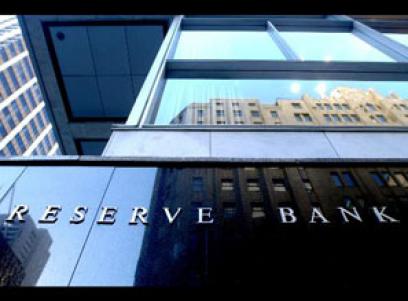
The Reserve Bank of Australia has raised its cash rate by 25 basis points to 4.85%, the highest level since late 2008, in a split board decision that underscores both the persistence of domestic inflation and growing internal debate about how much further monetary policy needs to tighten.
The move, the fifth rate hike of 2026, carries significant implications for Australian households, financial markets, and the broader economy as the central bank grapples with an inflation outlook that has materially deteriorated since its last forecasting round.
Aussie sharemarkets absorbed the decision with little fuss, the S&P/ASX 200 closing up 0.34% at 8,886.80, with Energy the notable decliner in an unrelated move. Critically, the 6-3 split vote was interpreted by forex traders as a signal that the RBA board is growing more cautious about further tightening, even as its own inflation forecasts point to an extended period of above-target price growth. The combination of a reluctant central bank facing stubborn inflation is an uncomfortable one for the Australian dollar.
RBA Comments: What To Expect Next
The RBA’s updated Statement on Monetary Policy delivered a sobering revision to the inflation outlook. The central bank now expects inflation to remain above 3% for the next year and not return to the top of its 2-3% target band until late 2027, roughly three quarters later than it had projected just months ago. The revision reflects a confluence of forces that the board acknowledges are proving more persistent than anticipated.
Elevated commodity and fuel prices, driven in part by the ongoing Middle East conflict, are feeding through supply chains into a broader range of goods and services. At the same time, the rapid global build-out of artificial intelligence infrastructure is generating unusual demand-side price pressures in technology hardware and related goods, a relatively novel inflationary driver that sits outside the traditional monetary policy playbook. Domestically, capacity pressures are running slightly tighter than previously estimated, with the RBA’s business liaison program showing that a significant number of firms are either already lifting prices or actively planning to do so in response to rising input costs.
Top Australian Brokers
- Pepperstone - Top Australian broker - Read our review
- eToro - Invest in ASX and international shares - Read our review
The board also revised its estimate of the non-accelerating inflation rate of unemployment (NAIRU) higher, to around 4.75%, reflecting a tighter structural labour market than previously assumed. Unemployment is now projected to rise to between 4.9% and 5.1%, as the cumulative weight of 125 basis points in rate hikes delivered in 2026 alone bears down on household budgets and business activity.
Housing Market Pressed
The housing market is already feeling the strain. Property prices across major capital cities have declined sharply, with Sydney reported to be down more than 10%, as variable mortgage rates approach 7% for many borrowers. RBA Governor Michele Bullock acknowledged the human dimension of the tightening cycle directly, noting that while the economy may technically avoid a recession, many Australian households “will feel like it’s a recession”, a candid admission of the distributional pain that higher rates are inflicting even as aggregate growth holds marginally positive.
Not all parts of the economy are contracting, however. Near-term business investment is expected to remain resilient, underpinned by substantial corporate spending on data centres and AI infrastructure. Construction firms, digital infrastructure developers, and related equipment suppliers are benefiting from a capital expenditure pipeline that shows little sign of slowing, providing a meaningful offset to weakness in residential construction and consumer-facing sectors.
No Guide
The board offered no explicit guidance on the future rate path, reiterating its commitment to a data-dependent approach and stating it will do whatever is necessary to return inflation sustainably to target. The three dissenting members who preferred to hold at 4.60% did not publicly elaborate on their reasoning, but the fact that a full third of the board dissented is an interesting clue.
The 6-3 vote is perhaps the most consequential piece of information to emerge from this decision, and markets are right to focus on it. A dissent of that magnitude in a nine-member board suggests the RBA is approaching, if not at, what many economists would characterise as a terminal rate.
That said, the inflation forecast revision makes it difficult to argue the tightening cycle is definitively over. With price growth not expected to reach the top of the target band until late 2027, the RBA retains both the mandate and the motivation to act again if incoming data on wages, services, or inflation expectations surprises to the upside.
Bull Case:
- The 6-3 split vote signals the RBA tightening cycle is likely approaching its terminal rate.
- Large bank net interest margins remain wide, supporting earnings and dividends near-term.
- AI and data centre investment sustains business capex, cushioning broader economic slowdown.
Bear Case:
- Inflation not returning to target until late 2027 keeps rates higher for longer than expected.
- Cumulative 125 bps in 2026 hikes push variable mortgage rates near 7%, crushing household budgets.
- Rising unemployment and falling house prices threaten consumer spending and credit quality.