



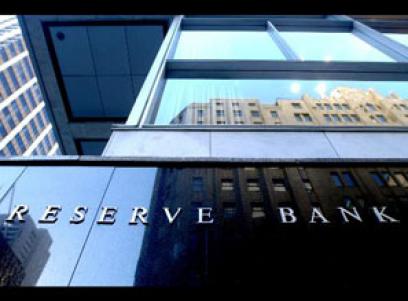
The Reserve Bank of Australia left its cash rate unchanged at 4.35% today, but maintained an explicit readiness to hike again, warning that Middle East-driven oil disruptions are complicating an already difficult inflation fight and could force further tightening if price pressures become entrenched.
The Australian dollar held steady following the decision, trading at elevated levels against the yen as markets digested the implications of the RBA’s hawkish hold versus the Bank of Japan’s simultaneous 25 basis point rate increase to 1.0%. Australian government bond yields remained under pressure, with the three-year yield holding near recent highs as markets kept alive the possibility of additional rate increases later this year. The ASX 200 traded mixed, down almost 1% out of the gate, before steadying to close at the high of the day, up 0.04%.
The Rate Decision
The decision itself was unanimous and broadly in line with market expectations, with 49 of 51 economists surveyed having predicted the hold. However, the persistence of strong tightening language in the Board’s statement prevented any relief rally in duration-sensitive assets.
The RBA Board kept the cash rate target at 4.35%, pausing after three consecutive increases earlier this year that have materially tightened financial conditions. Money market rates and bond yields have risen sharply, and the Australian dollar has strengthened, transmitting the policy tightening through the economy.
Top Australian Brokers
- Pepperstone - Top Australian broker - Read our review
- eToro - Invest in ASX and international shares - Read our review
The central bank’s statement highlighted that both headline and underlying inflation remain too high, with projections showing underlying inflation staying above the 2-3% target band until at least mid-2027. The Board emphasised that conflict-driven disruption to Middle East oil supply has pushed up fuel prices directly and fed through unusually quickly into broader goods and services prices, even as crude has retreated from recent peaks.
This oil shock has, in the RBA’s assessment, immensely complicated the inflation-versus-growth trade-off facing policymakers. Energy and related commodity prices remain materially higher than before the conflict escalation, keeping upward pressure on the consumer price index at a time when the central bank had hoped to see more decisive progress toward target.
Economy Slowing
The Board noted evidence that the economy is slowing as intended from the cumulative impact of monetary tightening. Consumer spending growth has eased as higher interest rates and real income pressures bite into household budgets. Housing market momentum is shifting, with prices falling in some capital cities and national turnover declining.
The labour market has also begun to cool faster than anticipated, with unemployment rising more quickly than the RBA expected in April. This signals emerging spare capacity and some moderation in labour demand, though wage growth remains elevated relative to productivity.
Short-term inflation expectations have eased from their recent highs but remain elevated compared to both the target range and pre-shock norms, keeping the Board wary of declaring victory prematurely.
Hiking Bias Retained
Crucially, the RBA maintained its explicit tightening bias, stating it will do what is necessary to return inflation to target and is prepared to raise the cash rate further if required. The Board emphasised there are plausible scenarios in which inflation runs higher than the May baseline forecasts while real activity undershoots, creating a stagflation-like risk profile.
This language makes clear the hiking cycle is not definitively over.
Markets and bank economists are now focused on the upcoming second-quarter CPI data as a key binary event that could quickly revive pricing for additional increases in August or potentially September if fuel and services inflation surprise to the upside.
Bank of Japan Hikes Rates Today
The RBA’s decision came on the same day the Bank of Japan lifted its benchmark rate by 25 basis points to 1.0%, the highest level since 1995, in a meeting held without Governor Kazuo Ueda, who was hospitalised. The BoJ vote was 7-1 in favour, with the policy board signalling further gradual normalisation ahead if inflation stays on track with the 2% target and wage momentum holds. The Nikkei 225 index closed 0.13% higher on the news.
While Japan is only just beginning to exit ultra-loose policy, Australia is already in restrictive territory and contemplating whether to tighten further.
This dynamic supports the Australian dollar on a relative carry basis, particularly against low-yielding currencies like the yen, though intervention risk remains elevated with USD/JPY trading above 160.
The same Middle East energy shock worrying the RBA is a factor for Japan as a net energy importer, and the interaction with yen weakness raises imported inflation concerns for Tokyo as well.
What This Means
The RBA’s hawkish hold creates an extended “high for longer with upside risk” regime for Australian monetary policy. This framework is structurally supportive for the Australian dollar on a carry basis, especially against European and Japanese currencies, but presents headwinds for domestic demand and rate-sensitive sectors.
For Australian share markets, the decision provides short-term relief to property and discretionary retail names by avoiding an immediate hike, but the possibility of further tightening caps re-rating potential and compresses valuation support for long-duration growth stocks. The RBA’s explicit willingness to sacrifice more growth if inflation doesn’t cooperate represents a macro overhang for cyclical and small-cap names.
Banks may see some margin support from a higher-for-longer rate structure, but bad-debt risk will rise if the economic slowdown and unemployment increase accelerate beyond current forecasts.
The next major test will be the second-quarter CPI release, which will determine whether the RBA’s pause extends through the third quarter or whether the Board is forced to resume tightening. With global energy prices still materially above pre-conflict levels and short-term inflation expectations remaining elevated, the balance of risks appears tilted toward at least one more rate increase before year-end, even as the domestic economy shows clear signs of cooling under the weight of existing tightening.




