



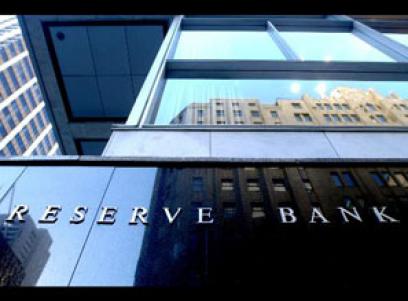
The Reserve Bank of Australia has raised its cash rate by 25 basis points to 4.10 per cent at its March 2026 meeting, marking the second consecutive increase this year and signalling a hawkish pivot that has caught markets off guard and reignited debate over whether monetary policy can address supply-driven inflation shocks.
The decision, which followed a February increase that took the cash rate from 3.60 per cent to 3.85 per cent, represents a dramatic reversal of the central bank’s 2025 easing cycle.
The RBA has now unwound all three rate cuts delivered last year in just two months, with major banks predicting the cash rate will reach at least 4.30 per cent by May. Bond markets are pricing in four hikes by year-end, suggesting traders believe the inflation threat is more persistent than official forecasts indicate.
Voting Mixed
The move was not unanimous, with only five of nine board members voting in favour of the March increase, underscoring the difficulty of the decision and the fine balance between controlling inflation and avoiding economic damage. This split vote reveals internal uncertainty about whether raising rates into an external supply shock represents sound policy or risks overtightening.
Top Australian Brokers
- Pepperstone - Top Australian broker - Read our review
- eToro - Invest in ASX and international shares - Read our review
In its statement, the RBA board acknowledged that while inflation has fallen substantially since its 2022 peak, it picked up materially in the second half of 2025. The central bank pointed to greater capacity pressures in the economy and sharply higher fuel prices stemming from the escalating Middle East conflict as key drivers of the renewed inflation threat. Treasury now expects headline inflation to reach the high four per cent range in 2026, well above the RBA’s 2-3 per cent target band.
The board specifically noted that short-term measures of inflation expectations have already risen, creating what it termed a material risk that inflation will remain above target for longer than previously anticipated. This language suggests the RBA is prioritizing its credibility and the anchoring of expectations over near-term growth concerns, a stance that has drawn both praise and criticism from economists and the public.
On the demand side, the RBA cited stronger-than-expected momentum in private demand during the latter part of 2025, though the composition surprised policymakers. Business investment exceeded forecasts while consumption fell short, creating an unusual pattern that complicates the inflation outlook. Meanwhile, the unemployment rate has edged lower than expected and measures of labour underutilisation remain at historically low levels, indicating continued tightness in the jobs market despite higher borrowing costs.
Housing Market Adds Another Layer
Housing market dynamics have added another layer of complexity. Activity and prices in the property sector grew strongly over the past year, though price growth moderated somewhat at the start of 2026. The combination of still-elevated house prices and rising mortgage rates is squeezing household budgets, with borrowers facing monthly payment increases of approximately 159 dollars on a 500,000 dollar loan, 238 dollars on a 750,000 dollar loan, and 318 dollars on a one million dollar loan as a result of the back-to-back hikes.
The RBA acknowledged that financial conditions have tightened somewhat this year, with the exchange rate, money market interest rates, and government bond yields all rising over the past month. However, the board noted that the extent to which monetary policy is restrictive remains uncertain, particularly as credit continues to be readily available to both households and businesses. The central bank also emphasized that the effects of the 2025 interest rate reductions have yet to flow through fully to aggregate demand, prices, and wages.
What About Energy?
The fuel price shock has emerged as the most contentious element of the inflation picture. Pump prices have risen by approximately 50 cents per litre on average, with some remote regions experiencing fuel shortages. The RBA framed this as both a direct upside shock to consumer price inflation via energy costs and a potential catalyst for a broader wage-price spiral if workers demand compensation for higher living costs and businesses pass through elevated input prices.
This framing has sparked intense public debate about whether monetary policy is the appropriate tool for addressing what many view as a supply-side shock beyond the central bank’s control. Critics argue that higher fuel prices already function as a de facto rate rise by reducing household discretionary income, making additional tightening by the RBA redundant at best and reckless at worst. They contend that rate hikes primarily hurt mortgage holders while doing little to address geopolitically-driven energy costs, risking a policy error that pushes the economy into recession without solving the underlying inflation problem.
Supporters of the RBA’s approach counter that cost-push inflation from energy can morph into broader price pressures as higher fuel costs feed through to transport, food, construction, and other sectors. They argue that early, measured rate increases are necessary to prevent inflation expectations from becoming unanchored and triggering a wage-price spiral that would require even more aggressive tightening later. Some also note that higher interest rates support the Australian dollar, which can partially offset imported inflation from USD-denominated commodities including oil.
The debate reflects a broader tension in central banking globally about how to respond when inflation stems from supply constraints rather than excess demand. With fiscal policy remaining relatively accommodative, the RBA finds itself as the primary macroeconomic stabilization tool, a position that concentrates both responsibility and political risk on monetary policy.
The Impact
For Australian households, the cumulative impact of higher rates and elevated fuel costs is creating a significant squeeze on living standards.
Mortgage holders are bearing the brunt of the adjustment, with the increases coming on top of already high debt servicing costs. This dynamic has raised concerns about credit quality in banks’ household loan portfolios, though non-performing loans have not yet risen materially. Consumer-facing sectors including retail, travel, leisure, and non-essential services are expected to feel the pressure as discretionary spending contracts.
The outlook for Australian equities is mixed and sector-dependent. Rate-sensitive areas including residential developers, real estate investment trusts, and consumer discretionary stocks face headwinds from tighter monetary policy and weaker household cash flow. Banks present a more nuanced picture, with net interest margins likely to benefit from higher rates in the near term even as credit risk concerns increase over the medium term. Exporters with limited domestic cost exposure may find some relief from moderating local wage pressure, though Australian dollar strength provides a partial offset.
In fixed income markets, the sharp repricing of the forward curve has pushed yields higher, creating near-term losses for bond holders but potentially attractive entry points for those willing to position for an eventual peak in the rate cycle. Credit spreads are likely to widen for lower-quality borrowers as default risk perceptions increase, while high-grade corporate and sovereign debt may attract income-seeking capital.
The Australian dollar has strengthened on the back of widening rate differentials and the RBA’s hawkish stance, though its status as a high-beta currency means it remains vulnerable to global risk-off episodes tied to the Middle East conflict or other external shocks. Over the medium term, a credible inflation-fighting stance by the RBA should support currency stability and capital inflows into Australian assets.
Looking ahead, the key question is whether the RBA can engineer a soft landing by raising rates just enough to contain inflation without triggering a sharp economic downturn. The split board vote and the uncertain degree of policy restrictiveness suggest the central bank itself is navigating with limited visibility. If the fuel shock proves transitory and inflation expectations remain anchored, the current tightening cycle may represent a prudent insurance policy that ultimately supports asset valuations by preventing a more damaging inflation overshoot. If, however, the RBA overtightens or the global economy weakens more than expected, Australian risk assets could face a prolonged period of underperformance.
Bull Case:
- Early rate hikes anchor inflation expectations, supporting medium-term valuation stability across assets
- Higher rates improve bank net interest margins, boosting near-term profitability
- Stronger Australian dollar from rate differentials mitigates imported inflation pressures
- RBA credibility enhances appeal of Australian sovereign and high-grade corporate bonds
- Preventing wage-price spiral now avoids need for more aggressive tightening later
Bear Case:
- Back-to-back hikes risk policy error and recession amid external supply shock
- Household cash-flow squeeze from rates and fuel undermines consumer spending growth
- Rate-sensitive sectors including housing and discretionary retail face prolonged headwinds
- Credit quality concerns rise as mortgage stress increases across household loan books
- Bond market pricing four hikes suggests markets doubt RBA can control inflation
The coming months will be critical in determining which scenario unfolds, with markets closely watching monthly inflation prints, labour market data, and any signs of stress in household or corporate credit. The RBA has signalled it stands ready to do what is necessary to return inflation to target, a commitment that provides medium-term confidence but near-term uncertainty. For now, the central bank has made clear that it views the risk of persistent inflation as more dangerous than the risk of overtightening, a judgment that will be tested as the economic data evolves and the full impact of higher rates flows through to the real economy.




