



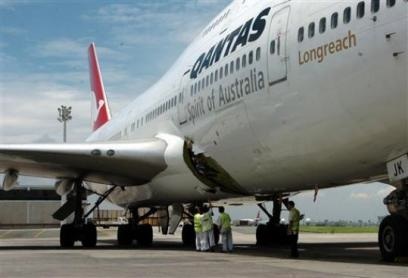
Qantas Airways shares (ASX: QAN) fell sharply today, despite reporting better-than-expected first-half earnings, as markets focused on rising costs and deteriorating international margins rather than the headline profit growth.
Qantas shares closed 9.2% lower at A$9.67 on the day, wiping A$1.5B from the airline’s market capitalisation despite delivering underlying profit before tax of A$1.456 billion, approximately 2% ahead of consensus estimates. The sharp selloff came after an initial 6.3% decline to A$9.98 immediately following the earnings announcement, with continued pressure throughout the trading session as markets digested the detail beneath the headline numbers.
The decline represents a significant vote of no confidence from markets, particularly given the company simultaneously announced increased shareholder returns through both a 20% dividend increase and a new A$150 million buyback programme.
What Was In The Print?
For the six months ended December 31, 2025, Qantas delivered revenue growth of 6.3% to A$12.9 billion, with contributions across all business segments. The Qantas Domestic division generated A$4.2 billion in revenue, up 5% year-on-year, while Qantas International including Freight rose 5% to A$4.9 billion. The Jetstar Group posted stronger growth of 8% to A$3.1 billion, and the standout performer was Qantas Loyalty, which surged 19% to A$1.4 billion.
Underlying profit before tax increased 5.1% to A$1.456 billion, translating to the fully franked interim dividend of 19.8 cents per share—a A$300 million return to shareholders. The company also committed to an on-market share buyback of up to A$150 million, demonstrating confidence in its balance sheet strength.
Top Australian Brokers
- Pepperstone - Top Australian broker - Read our review
- eToro - Invest in ASX and international shares - Read our review
However, the international segment proved problematic. Underlying profit in Qantas International declined 8% to A$300 million, with operating margins compressing to 6.2% from 7.1% in the prior corresponding period. This deterioration stemmed from rising labour and maintenance costs, coupled with softer demand on critical US-Australia routes.
Cost pressures mounted across the business, with a A$191 million impact from CPI-related increases and an additional A$40 million in higher net industry costs. Fuel expenses also weighed on results, with the airline facing approximately A$2.62 billion in fuel costs for the first half, reflecting elevated refining margins.
Fleet Renewal and Capacity Expansion
Qantas is executing what it describes as the largest fleet renewal in company history, having taken delivery of 18 new aircraft during the half-year period. The airline plans to introduce an additional 30 aircraft over the next 18 months, a capital-intensive programme designed to enhance operational efficiency and reduce unit costs over the medium term.
The fleet modernisation represents a significant strategic bet that newer, more fuel-efficient aircraft will offset near-term margin pressures through lower maintenance requirements and improved operating economics.
Forward Guidance and Economic Headwinds
Looking ahead to the second half of fiscal 2026, Qantas expects continued strong travel demand across its portfolio but flagged monitoring of the evolving US economic environment. Group Domestic unit revenue is forecast to increase approximately 3% compared to the previous year, while Group International unit revenue is projected to rise 1-3%, inclusive of higher capacity mix from Qantas International.
These forecasts represent a moderation from earlier expectations. In November 2025, the airline had already revised its domestic unit revenue growth outlook to approximately 3%, down from a previous range of 3-5%, citing softer non-resource corporate demand.
The company’s caution around US economic conditions reflects broader market concerns about potential recession risks and their impact on premium international travel demand, which typically generates higher margins than economy cabin bookings.
Dividend Expectations
While the 19.8 cent interim dividend represented a 20% increase on the prior period, some market participants had anticipated a more aggressive payout given the company’s strong balance sheet position and cash generation. The dividend fell short of certain forecasts, contributing to the negative market reaction despite the accompanying buyback announcement.
The combination of shareholder returns totalling A$450 million through dividends and buybacks demonstrated management’s commitment to capital allocation, yet markets appeared more focused on the sustainability of future earnings given the cost and margin pressures evident in the results.
Cost Inflation and Challenges
The compression in international operating margins from 7.1% to 6.2% raised particular concern among markets about the airline’s ability to pass through cost increases to customers in an increasingly competitive environment. Labour agreements, maintenance schedules on an ageing fleet, and elevated fuel costs present ongoing headwinds that may prove difficult to offset through pricing power alone.
The A$191 million CPI-related cost impact suggests inflation remains embedded in the airline’s cost base, with limited near-term relief in sight. Markets are questioning whether the revenue growth trajectory can keep pace with cost inflation, particularly if economic conditions soften and competitive dynamics intensify.
The 8% decline in international segment profit highlighted specific route challenges, particularly on trans-Pacific services to the United States. Weaker demand on these traditionally high-margin routes, combined with increased competition from US carriers and Gulf-based airlines, has pressured both load factors and yields.
The international business faces the dual challenge of absorbing higher costs while navigating softer demand in key markets, creating a difficult operating environment that may persist through the remainder of fiscal 2026.
Bull Case:
- Revenue growth of 6.3% demonstrates resilient demand across all business segments
- Loyalty division surged 19% showing high-margin recurring revenue stream strength
- Fleet renewal programme will drive long-term efficiency gains and cost reductions
- Increased dividend and buyback reflect strong balance sheet and cash generation
- Domestic unit revenue growth of 3% expected despite economic headwinds
Bear Case:
- International operating margins compressed from 7.1% to 6.2% signalling pricing pressure
- CPI-related costs jumped A$191 million with limited ability to offset inflation
- US route weakness threatens high-margin trans-Pacific revenue in key market
- Dividend fell short of expectations despite profit beat raising payout concerns
- Second-half guidance shows moderation with international revenue growth only 1-3%
Qantas delivered a solid profit result that exceeded consensus expectations and enabled increased shareholder returns, yet markets looked past the headline beat to focus on deteriorating margins, rising costs, and a more cautious outlook for international operations.
The 9.2% QAN share price decline reflects concern that near-term cost pressures may prove more persistent than revenue growth momentum, particularly if economic headwinds intensify in key markets like the United States. While the company’s massive fleet renewal programme positions it for improved efficiency over the medium term, markets are demanding evidence that management can stabilise margins and navigate the challenging cost environment before rewarding the stock with a higher valuation.




