



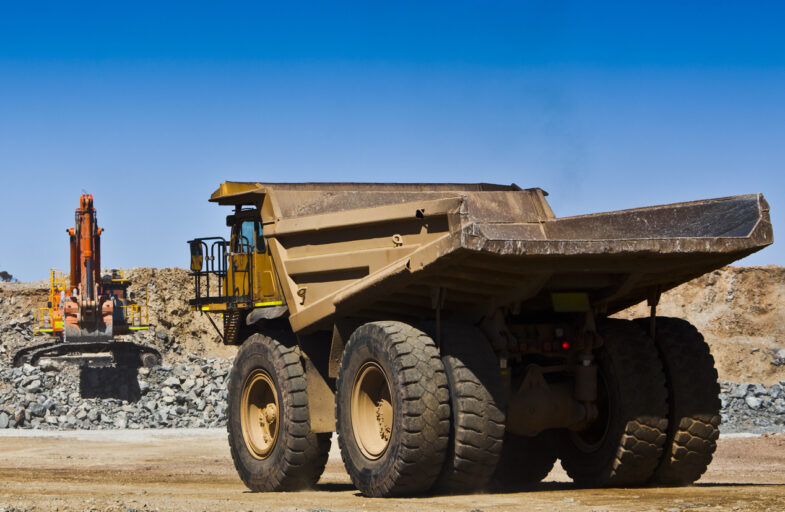
PLS Group shares (ASX: PLS) fell 6.03% on Tuesday to A$5.14, giving back some recent ground, the day after the company delivered one of its strongest annual results on record. The move is a sharp reminder that even genuinely impressive numbers can struggle to extend a rally when the stock has already more than doubled in the past year and the forward story carries real execution and cost questions.
What is driving PLS shares?
The pullback is largely being driven by lithium pricing, with the overnight prices falling more than 2%. Looking at the results, and revenue surged 152% to $1.9 billion in fiscal 2026, driven by a 121% jump in realised spodumene pricing to US$1,488 per tonne and record production of 880,000 tonnes.
Net profit swung from a loss to $526 million, and the company closed the year with $2.3 billion in cash. Management declared a fully franked final dividend of five cents per share, the first in three years, and framed the result as a decisive shift from defence to growth. That is a compelling scorecard. But the market today appears to be weighing the next chapter against the current price rather than celebrating the last one.
The forward guidance is where the tension sits. Unit operating costs are expected to rise in fiscal 2027 to between $575 and $625 per tonne, up from $569, as the higher-cost Ngungaju plant returns to the production mix. Capital expenditure guidance nearly doubles to $620-$685 million, reflecting the ramp-up of pre-FID work on the P2000 expansion and ongoing Colina project studies in Brazil. Together, those figures sketch a period in which margins face near-term pressure even as longer-term capacity grows. For investors who bought the stock at lower prices during the lithium trough, locking in gains before that capex cycle intensifies is a rational response.
The P2000 expansion is central to the growth story. Management has approved $175 million in pre-FID spending to advance plans that could lift Pilgangoora’s capacity to roughly two million tonnes per annum, essentially doubling the current operation. The company describes it as a brownfields build with greenfields characteristics, meaning it benefits from existing camp, power and support infrastructure but is spatially separate from the current plant. A final investment decision is expected later this year. The Colina project in Brazil adds another dimension, with a recent bolt-on tenement acquisition expected to feed into revised study outcomes due in the December quarter of next year. Both projects carry execution and jurisdictional risk that the market is now beginning to price more carefully.
Top Australian Brokers
- Pepperstone - Top Australian broker - Read our review
- eToro - Invest in ASX and international shares - Read our review
On the commercial side, management has structured offtake agreements with a US$1,000 per tonne floor price, no price ceiling, and prepayment provisions, a structure designed to protect cash flows through cycle volatility while retaining exposure to upside. The BMX platform, which Pilbara pioneered in 2021 and 2022, is not currently active, with management arguing the market now has sufficient price discovery mechanisms through other channels. That strategic shift reflects a more mature lithium market but also removes a source of potential premium pricing in a rising spot environment.
View from the Street
The average price target sits at A$5.14, barely above today’s close of $5.09. The technical setup reinforces the sense of a stock in a powerful but increasingly volatile trend, with the trend-strength indicator elevated and rising, consistent with the broader uptrend that has carried the PLS share price from $2.15 a year ago to above $5.00. But volatility has expanded sharply, up roughly 28% on the prior reading, pointing to a market that is recalibrating rather than simply drifting. With a beta of 1.78 against the ASX 200 and rising, PLS is structurally prone to outsized moves in both directions, and today’s session volume of more than 18.7 million shares suggests this is active repositioning by real money rather than thin-market noise.
Bull Case:
- Record $2.3bn cash balance funds growth without dilution risk.
- P2000 approval could double capacity and reset long-term earnings.
- Offtake floor prices protect margins if lithium prices soften.
Bear Case:
- FY27 capex nearly doubles, compressing near-term free cash flow.
- Higher-cost Ngungaju tonnes will lift unit costs in fiscal 2027.
- Consensus target implies the stock is already fully valued today.




