



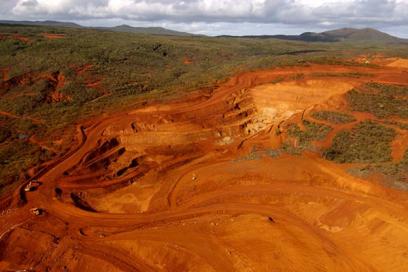
Nickel Industries shares (ASX: NIC) jumped today after the company reported a sharp operational recovery in May and outlined imminent cash inflows totalling US$85 million, reinforcing confidence in its strategic pivot toward battery-grade nickel production.
The Nickel Industries share price closed out 3.57% higher at A$1.02, outpacing broader market gains and extending the stock’s recovery from multi-year lows, up 110% since April last year. Trading volumes were elevated at more than double the three-month daily average, signalling renewed interest from both institutional and retail participants as the company’s Excelsior Nickel Cobalt (ENC) HPAL project approaches first production.
The move marks a notable reversal from earlier in 2026, when the stock traded below 90 cents amid concerns over weak nickel prices and operational headwinds at the company’s Hengjaya Mine. Wednesday’s update provided concrete evidence that those issues were temporary, with May EBITDA nearly doubling from April levels.
Update Reveals Operational Recovery and Cash Inflows
Nickel Industries reported adjusted EBITDA from operations of approximately US$80 million for the combined April and May 2026 period.
April’s contribution of US$29 million reflected the impact of unplanned downtime at the Hengjaya Mine and scheduled maintenance across processing facilities. However, May delivered a strong rebound to roughly US$51 million as operations normalised and ore feed rates recovered.
Top Australian Brokers
- Pepperstone - Top Australian broker - Read our review
- eToro - Invest in ASX and international shares - Read our review
The company also announced the release of working capital from its rotary kiln electric furnace (RKEF) operations, with approximately US$70 million expected to be received by early July 2026. This cash inflow, combined with a US$15 million refund of an option fee from Shanghai Decent, Nickel Industries’ largest shareholder, relating to the ONI matte converter project, will bolster the balance sheet and provide funding flexibility as the ENC HPAL project ramps up.
The decision not to proceed with the ONI matte converter marks a strategic pivot for Nickel Industries, which is now concentrating capital and management bandwidth on HPAL technology. The company views HPAL as offering superior margins and a cleaner environmental footprint compared to traditional matte processing, aligning with growing demand for responsibly sourced battery materials.
ENC HPAL Project on Track
The Excelsior Nickel Cobalt HPAL project, in which Nickel Industries holds a 46% stake and serves as the largest shareholder, continues to progress through commissioning. The facility received its first ore in May 2026, and the company expects to produce mixed hydroxide precipitate (MHP), a key intermediate product for battery cathode manufacturing, by mid-July. Nickel cathode production is targeted for mid-August, with commissioning of the refinery and leach circuit scheduled for late June.
Once operational, ENC is designed to produce approximately 72,000 tonnes per annum of nickel equivalent at full capacity, with output ramping through the second half of 2026 and into 2027. The project is located within Indonesia’s integrated industrial park at Morowali, providing access to infrastructure, power, and logistics that support cost-competitive operations.
Nickel Industries plans to register its cathode products with the London Metal Exchange and Shanghai Futures Exchange, enhancing liquidity and price transparency for offtake partners. The company has secured strategic backing from Sphere Corp, a South Korean advanced materials firm that acquired a 10% stake in ENC at a project valuation of approximately US$2.4 billion. That valuation implies significant look-through value for Nickel Industries’ 46% interest and provides external validation of the project’s quality and commercial potential.
Backdrop Less Certain
While the operational update was positive, Nickel Industries faces headwinds from elevated sulfur prices, a critical input for HPAL processing. Industry sources indicate that the company has secured sulfur inventory at around US$450 per tonne to cover commissioning through at least September 2026, providing near-term cost visibility but embedding higher input costs than in prior cycles. If nickel prices remain range-bound while sulfur costs stay elevated, margins at ENC could come under pressure during the ramp-up phase.
Broader nickel market fundamentals remain mixed. Despite production cuts in Indonesia and quota restrictions on ore exports, global nickel supply is expected to remain in surplus through much of 2026, particularly for nickel pig iron and lower-grade intermediates. Weak stainless steel demand in China has weighed on prices, with benchmark nickel trading below US$16,000 per tonne on the London Metal Exchange for much of the year.
However, demand for battery-grade nickel, including MHP and nickel sulfate, is projected to grow significantly as electric vehicle production scales globally. Nickel Industries’ pivot toward Class 1 nickel products positions the company to capture potential margin premiums and participate in supply agreements with battery and automotive manufacturers seeking to diversify away from purely Chinese supply chains.
What Next?
Markets will closely monitor the next two months as ENC moves from commissioning into production. The company’s ability to deliver MHP and cathode on schedule, achieve targeted metallurgical recoveries, and control costs will be critical to validating the investment case and supporting a potential rerating toward net asset value-based price targets cited by some sell-side analysts.
The US$70 million working capital release and US$15 million refund provide near-term liquidity, reducing the risk of dilutive capital raises during the ENC ramp. However, the company remains operationally leveraged to nickel prices and exposed to execution risk at a large, complex HPAL facility that has yet to demonstrate steady-state performance.
Bull Case:
- May EBITDA of US$51 million proves April weakness was temporary operational issue
- US$85 million cash inflow by July strengthens balance sheet without dilution
- ENC first production in July and August provides near-term catalysts
- 46% ownership and US$2.4 billion ENC valuation implies significant NAV upside
- HPAL pivot aligns company with battery demand and ESG premiums
Bear Case:
- Nickel oversupply and weak Chinese demand may cap price upside through 2026
- Elevated sulfur costs at US$450 per tonne squeeze HPAL margins
- HPAL commissioning carries execution risk including delays and cost overruns
- Hengjaya downtime in April highlights single-asset operational leverage
- Repeated strategy pivots raise questions about capital allocation discipline




