
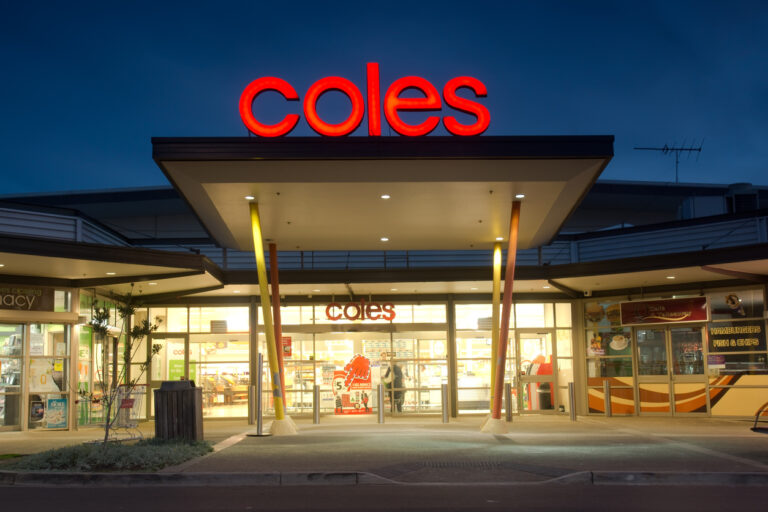
Coles Group shares (ASX:COL) fell 11.77% last week, rounding out October 7.28% lower at $21.66 on heavy volume. There were 15.28million shares changing hands on the final day of the month, 5.77x the ADV, as the technical structure broke down.
The fundamental trading update was the cause, and the reaction saw Coles share price fall through the 200 day SMA, and test the YTD break even line before closing more than 5% up off the intraday low. As bad as it was then, it could have been worse.
Why are Coles shares falling?
The first-quarter trading update triggered the move, despite what looked decent enough on a top level. Group sales rose 2.2% to $11.2 billion for the quarter, with supermarkets contributing $10.3 billion, up 3.6%, and comparable sales growth of 2.7%. In isolation those numbers suggest a business holding its ground in a tough consumer environment. The problem is that analysts had been expecting supermarket sales growth closer to 4.2%, and the miss on that line was only the beginning of the bad news.
Management’s guidance that first-half supermarket earnings before interest and tax will come in roughly flat against the prior corresponding period made things worse, as even though sales are growing, the cost of generating that growth, through price investment, elevated promotional activity and higher fuel costs, is eating away at the margin. Coles is spending to compete, and for now that spending is not translating into profit growth.
Looking at competitors, Woolworths recently reported Australian food sales growth of around 6.9%, which is roughly double Coles’ comparable rate. That gap has repositioned the two companies in investors’ minds, at least for now. The market appears to be asking whether heavier promotions and price investment will be enough to close that gap, or whether Coles will need to sustain the spending indefinitely, keeping margins pressured.
Top Australian Brokers
- Pepperstone - Top Australian broker - Read our review
- eToro - Invest in ASX and international shares - Read our review
Within the broader rotation, Consumer staples are supposed to offer earnings stability when the economy is under pressure, and demand for groceries is not collapsing. But the cost-of-living environment is cutting both ways for Coles, limiting the company’s ability to recover cost inflation through the shelf price. Fuel costs, wage pressures and supplier inflation are all working against the margin line at the same time.
On a positive note, the company’s automation and cost-savings program delivered $311 million in savings in the most recent full year, and underlying net profit after tax grew 13.7% over that period. Online profitability has also been improving.
The setup from here
Looking to the analyst community, the average price target of $24.23 points to perceived upside of ~10% from here, albeit those were built on earnings models that predate this latest flat first-half EBIT guidance. Citi analyst Adrian Lemme flagged that the downgrade appeared driven by price investment and Woolworths’ pricing strategies, and broader commentary points toward a meaningful round of forecast cuts.
As far as the technical setup, whilst the price moved more than 5% off the lows into the weekend, there is a clear bearish tilt. The stock has been testing the 30day and 50day SMAs before the update, only to now sit well below both, alongside the 200 day at A$22.66, and its 20-day Bollinger Band midpoint. The latest completed daily bar carries a bearish momentum signal, consistent with deteriorating trend conditions, and all this coming on heavy volume points to a clear technical breakdown.
The worst day, and the worst performing month of the year are now in the bag, and bulls will be looking to start November in better form. With Coles shares clinging to a 1.5% YTD gain, and just a week off new ATHs, the technical breakdown could well meet resistance the other way. Down 1.77% on a TTM basis, there remains plenty for both sides to cling to as November begins.
Bull Case:
- Supermarket sales are still growing, with no sign of demand collapse.
- Automation savings and cost programs provide a structural earnings floor.
- Consensus target implies 10.7% upside; valuation may attract long-term buyers.
Bear Case:
- Flat first-half EBIT guidance signals margin pressure is already embedded.
- Woolworths growing food sales at roughly double Coles’ rate widens competitive gap.
- Broker forecast cuts could push consensus targets lower, removing valuation support.