



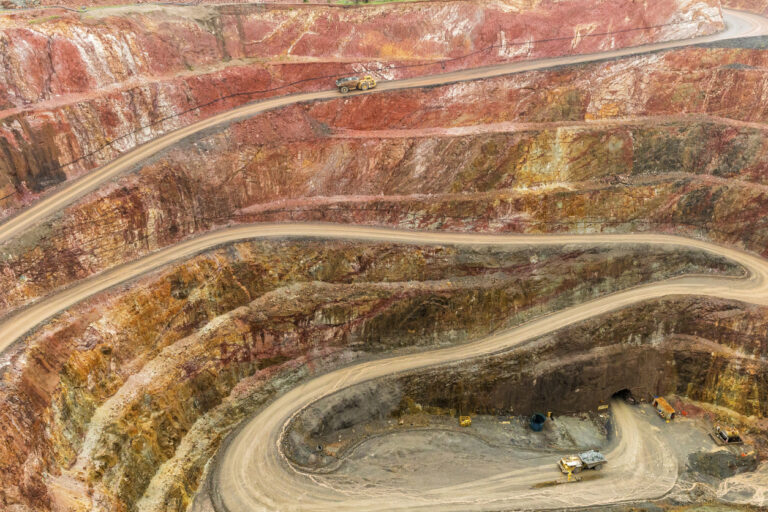
BHP Group shares fell 2.48% today as iron ore futures extended their losing streak into a fourth consecutive week, testing a psychologically important price threshold that has historically marked the lower bound of the commodity’s cost-support range.
The BHP share price rounded out the week down 1.72%, while sector peers Rio Tinto and Fortescue shares declined 0.57% and 7.98% respectively. The sell-off came as Singapore iron ore futures touched US$100.85 per tonne, the weakest level since 6 March. The synchronized decline across Australia’s major iron ore producers underscores the sector’s continued sensitivity to near-term commodity price movements, even as companies diversify their earnings bases.
Pressure on Iron Ore Fundamentals
There are a few key factors driving the current weakness in iron ore markets.
Chinese steel demand has entered its seasonal soft patch earlier and more sharply than usual this year, according to the China Iron and Steel Association. Weaker construction activity, coupled with hot weather and rainfall disrupting outdoor projects, has dampened consumption at a time when the market typically experiences a lull.
At the same time, global iron ore shipments remain elevated despite softening demand. Recent data shows exports from Australia and Brazil near a two-year high, with overall shipments up approximately 7% year-on-year in April. This supply-demand imbalance has intensified downward pressure on spot and futures prices, creating an overhang that markets are struggling to absorb.
Top Australian Brokers
- Pepperstone - Top Australian broker - Read our review
- eToro - Invest in ASX and international shares - Read our review
Then we have steel mill economics which have deteriorated for a second consecutive week. Rising coking coal costs have squeezed profitability even as steel selling prices drift lower, prompting mills to cut production and shift from forward restocking to just-in-time ore purchasing. This behavioural change reduces near-term seaborne demand precisely when shipment volumes remain robust, amplifying the price correction.
BHP’s Structural Position
Despite the near-term headwinds, BHP retains significant structural advantages that differentiate it from pure-play iron ore competitors. The company’s Western Australia Iron Ore operations remain the lowest-cost major seaborne producer globally, providing a substantial margin cushion when prices weaken.
More significantly, BHP’s latest half-year results for FY2025-26 demonstrated the company’s successful portfolio transformation. Net profit reached approximately US$7.1 billion, up from US$5.3 billion year-on-year, with revenue climbing 11%.
Copper has now emerged as the largest single earnings driver, surpassing iron ore for the first time in the company’s history. Production from assets including Escondida and Olympic Dam increased substantially, benefiting from both higher volumes and favourable pricing. The company reiterated its copper production targets and highlighted long-term demand tailwinds from electrification and energy transition.
Looking Ahead
Markets now face a tension between near-term iron ore weakness and BHP’s improved structural earnings profile. The seasonal lull in Chinese steel demand is a recurring phenomenon that typically resolves as construction activity rebounds in autumn, while the current supply-demand imbalance may self-correct as marginal producers respond to price signals. Steel mill margin compression, though acute at present, tends to be cyclical rather than permanent, suggesting potential for restocking once input cost pressures ease.
For BHP specifically, the growing contribution from copper provides a natural hedge against iron ore volatility, though the company remains materially exposed to Chinese industrial activity through both commodities. While today’s pull back reflects legitimate concerns about near-term iron ore fundamentals, BHP’s low-cost position, diversified portfolio, and strong cash generation capacity suggest the shares are being driven more by cyclical sentiment than structural deterioration, setting up a potential inflection point once Chinese demand patterns clarify and global supply adjusts to current price levels.
Bull Case:
- BHP is lowest-cost iron ore producer with robust margins even at US$100/t
- Copper now largest earnings driver, reducing iron ore concentration risk significantly
- US$80–100/t represents historical cost-support band where high-cost supply curtails
- Strong balance sheet and dividend capacity support valuation through cycles
- Seasonal Chinese demand weakness typically reverses in autumn construction season
- Any Chinese stimulus or infrastructure spending would drive sharp restocking demand
Bear Case:
- Fourth consecutive weekly loss signals developing downtrend rather than one-off weakness
- Steel mill margin squeeze prompting just-in-time buying reduces near-term cargo demand
- High global shipments into soft demand creates persistent oversupply overhang
- Break below US$100/t psychological level could trigger momentum-driven selling acceleration
- Early onset of seasonal lull suggests weaker underlying Chinese construction fundamentals
- Forward earnings revisions likely as analysts adjust iron ore price decks lower




