



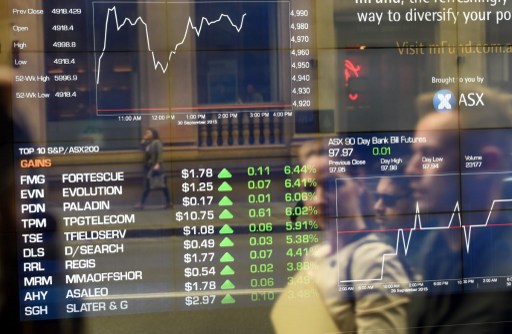
The S&P/ASX 200 experienced a sharp downturn today, relinquishing a month’s worth of gains as stronger-than-expected employment data tempered expectations for near-term interest rate cuts. The index’s performance underscores the sensitivity of the Australian market to macroeconomic indicators and global economic pressures.
The ASX 200 plummeted 1.94% today, bringing its one-month decline to -5.85%. This pullback significantly reduces the index’s gains for 2025 to just 3.80%. The technology sector was particularly affected, mirroring declines in U.S. tech stocks, while the financial sector also faced headwinds following Commonwealth Bank’s earnings report.
Top Australian Brokers
- Pepperstone - Top Australian broker - Read our review
- eToro - Invest in ASX and international shares - Read our review
Recent employment figures revealed the unemployment rate decreased to 4.3% from 4.5%, with employment rising by 42,200 jobs, exceeding the anticipated 20,000. This robust labor market performance has led markets to reassess the likelihood of near-term interest rate cuts by the Reserve Bank of Australia (RBA).
Commonwealth Bank of Australia (CBA) reported a cash profit of $2.6 billion, up 2% from the previous quarter. However, the report highlighted net interest margin contraction due to growth in lower-yielding assets and rising cost pressures.
Despite the widespread downturn, some companies bucked the trend. James Hardie Industries (JHX) surged 9.87% following a strong earnings report. Pilbara Minerals (PLS) increased 3.28%, benefiting from favorable critical minerals policies. Liontown Resources (LTR) rose 2.06%, and The a2 Milk Company (A2M) gained 1.72%.
Conversely, TechnologyOne (TNE) shares plummeted 17.2% despite reporting record earnings. Other notable decliners included Pinnacle Investment Management (PNI), down 6.57%, Zip Co Ltd (ZIP), falling 6.37%, and DroneShield Ltd (DRO), which dropped 5.77%.
Global market jitters, including trade tensions and economic uncertainties, have also contributed to the ASX 200’s decline. Markets are reacting to a combination of factors, including cautious statements from Federal Reserve officials regarding inflation risks and interest rate policies.
The ASX 200’s recent performance reflects a complex interplay of domestic economic data, sector-specific challenges, and global uncertainties. While some companies have demonstrated resilience, the overall market sentiment remains cautious as markets digest the implications of a robust labor market and the potential for sustained higher interest rates.




